Signs is a universal word in the English language. In this article, we will take a detailed look at the use of sign / signs in various fields: from mathematical symbols to zodiac signs, from road signs to signs in sign language.
Symbols, signs (mathematics and punctuation)
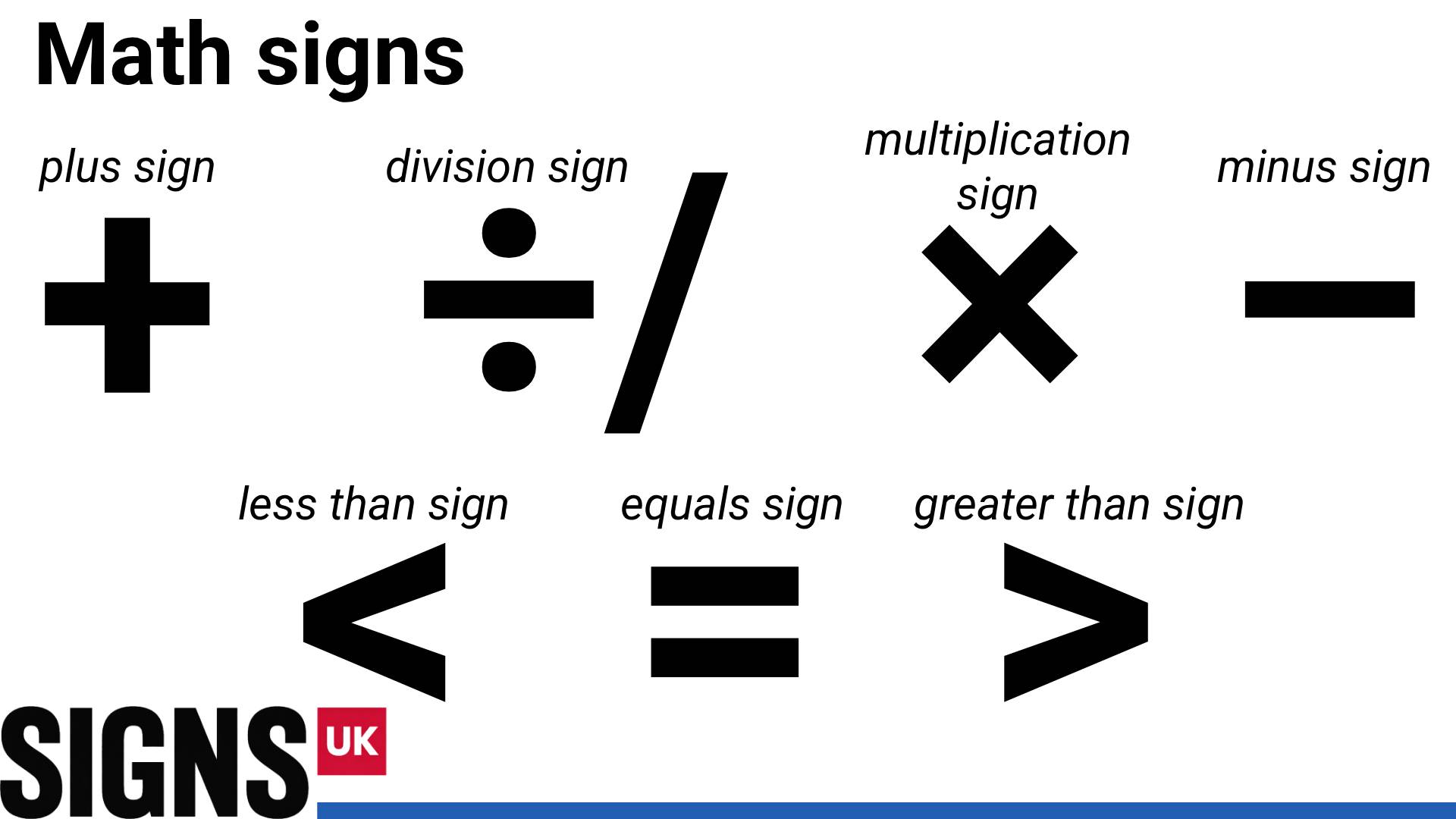
Symbols and signs are used in scientific language, logic, and writing. They help convey complex ideas concisely, succinctly, and accurately. In mathematics, physics, and linguistics, they are used as universal tools. Their meaning is clear without translation. Addition signs, integrals, commas, quotation marks — each symbol has its own meaning, they form the structure of knowledge and simplify interaction between people representing different cultures and eras. Symbols can represent ideas, objects, relationships or mathematical formulas, their use largely depends on the context.
Math signs
The history of mathematical symbols has been shaped over centuries. They have come a long way from verbal descriptions to the symbolic language of science. In ancient times, the Egyptians and Babylonians used words and drawings to denote operations. The formation of modern signs began in the 16th and 17th centuries: the ‘+’ sign first appeared in 1489, coined by Nicholas Chuke, and the ‘–’ sign was invented by Johann Widmann. The equal sign ‘=’ was invented by Robert Record in 1557. He believed that ‘nothing can be more equal than a pair of identical lines.’ Over time, mathematics has transformed into a universal language, where each symbol has a precise logical meaning. Scientists use them to express complex ideas, giving them a compact form.
Math signs interesting facts
- The infinity symbol (∞) was introduced by mathematician John Wallis Great of Britain in 1655. One version says that the scientist was inspired to invent it by the inverted Roman numeral 1000 (CIƆ).
- The percentage sign (%) originates from the Latin expression per cento, meaning ‘per hundred’. In manuscripts dating back to the Middle Ages, it was written as “pc” or ‘p cento’.
- The division sign (÷), called ‘obelus,’ was used in ancient times to mark questionable passages in texts.
- The symbol π (pi) was invented by William Jones in 1706. This symbol owes its popularity to Euler, who chose the Greek letter ‘π’ from the word perimetros, meaning ‘circle.’
- In different eras, the same symbols were used to denote different operations. They were standardised in the 18th and 19th centuries with the emergence of the system still in use today.
Punctuation signs (less common; more often — marks)
Punctuation signs help to organise and structure sentences. The term comes from the Latin word punctum, meaning a pause or stop.
The history of punctuation marks is inextricably linked to the development of writing and printing. The first writers were monks who lived in the Middle Ages. They created handwritten books, but did not use punctuation marks or separate the text into individual words. Most manuscripts from that period consist of words written with virtually no spaces between them. Sometimes scribes separated words with dots or crosses, without following any rules.
The urgent need for punctuation marks arose with the emergence and rapid development of printing in the 15th and 16th centuries. In the mid-15th century, Italian printers Manuzio invented punctuation for European writing. It was adopted in general terms in many European countries and is still used today.
Punctuation signs meaning
Punctuation marks play an important role in written speech, helping to accurately convey the meaning of the text as well as the author's emotions. They structure the flow of information, making it more understandable for the reader.
The presence of commas separating complex sentences makes them easier to understand. These same punctuation marks are used when listing elements, and full stops are used to express the end of a thought. Question marks and exclamation marks are needed to convey intonation. Dashes and colons serve as introductory explanations, quotation marks are indispensable for highlighting quotations, and brackets are used to include additional comments.
Without punctuation marks, text would be an endless stream of words in which it would be difficult to establish sentence boundaries and identify semantic connections between its components. The correct use of punctuation marks is an important condition for competent written communication.
Signs, symptoms, evidence (evidence/indications)
Signs, symptoms, and evidence are used to describe characteristics and properties. Signs help to identify objects, subjects, or phenomena. They are also defined as indicators, omens, and signs for identifying something. There are behavioural, economic and weather signs. A number of signs are used to diagnose health problems.
Signs of stress
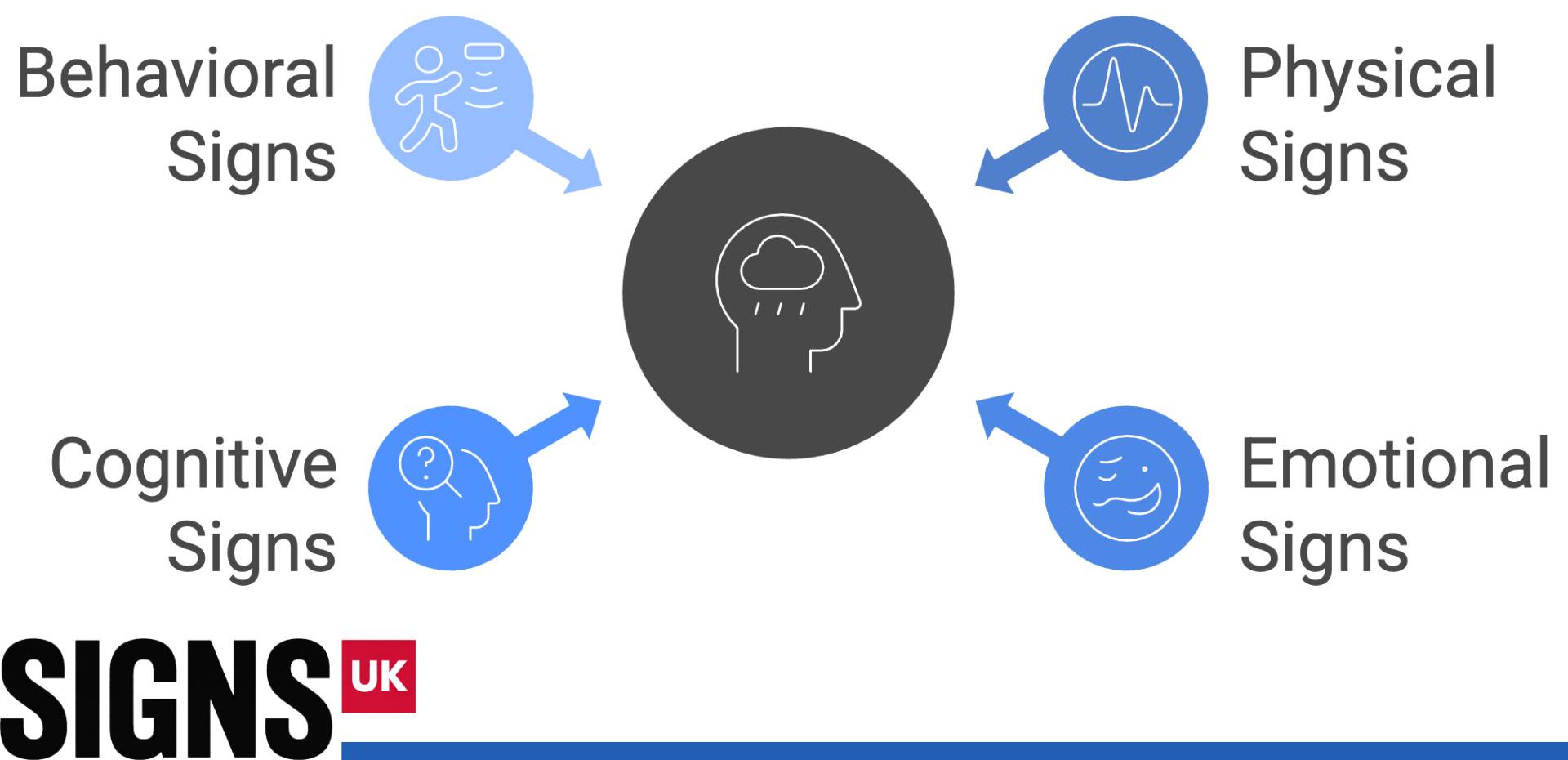
Stress in humans manifests itself in a number of different signs that affect physical, emotional and behavioural states. There are physical, emotional, cognitive and behavioural symptoms. Different people experience different manifestations of stress.
- Physical signs of negative external influences include rapid heartbeat combined with shortness of breath, dizziness, nausea, upset stomach, tremors and sweating, insomnia, nightmares, and frequent awakenings.
- Emotional signs of stress include anxiety and restlessness, irritability, displays of anger and intolerance, irritability, bad mood, feelings of emptiness and uselessness. A person experiencing stress often cannot relax and loses interest in activities that previously brought them joy and pleasure.
- Cognitive signs of stress are associated with poor memory, difficulty concentrating, negative thinking, pessimism, and decreased creative thinking.
- Behavioural signs of stress include changes in eating habits, such as poor or, conversely, excessive appetite, the desire to consume stimulants (coffee, alcohol, cigarettes), procrastination, social isolation, and unwillingness to interact with others. People who are under stress often develop nervous habits such as rocking their feet or constantly twirling their hair. Their behaviour can be aggressive or impulsive. Another behavioural sign of stress is a decrease in productivity at work or in the learning process.
Signs of burnout
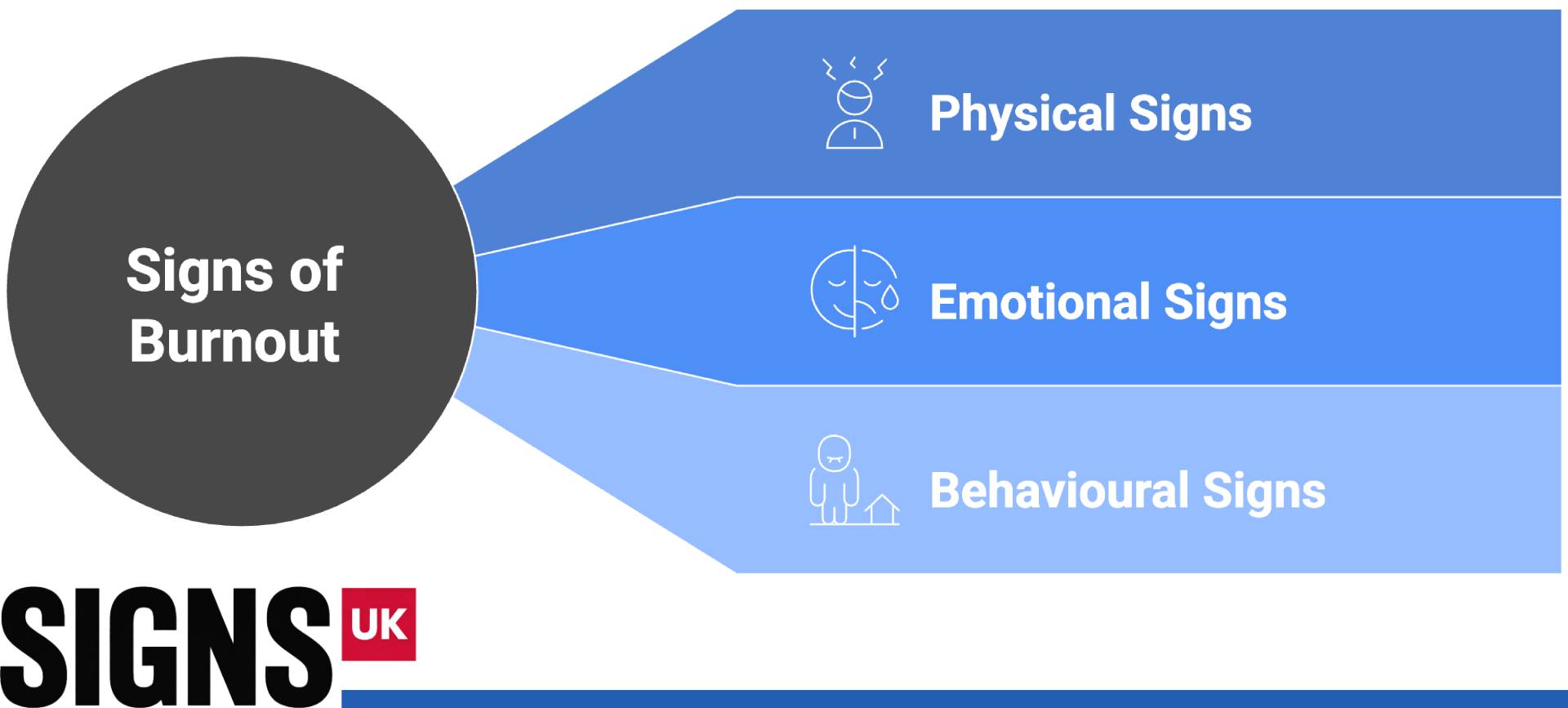
Emotional burnout refers to a state of physical, emotional, and mental exhaustion caused by prolonged stress, overload, or conflicts in one's personal life and workplace.
- The physical signs of burnout are chronic fatigue and lack of energy. The person feels exhausted even after a good night's sleep. They may suffer from frequent headaches or muscle pain, changes in appetite, a weakened immune system and frequent illnesses.
- Emotional signs of burnout include a loss of interest in work. The person becomes cynical and sceptical, and may become tearful or angry. Even minor difficulties provoke a strong reaction.
- Behavioural signs include isolation, unrealistic expectations, and decreased productivity. People who have experienced burnout often exhibit self-destructive behaviour: they smoke, overeat, and consume large amounts of alcohol. This is how they try to cope with the negative emotions that overwhelm them.
Signs of depression
The main signs of depression include:
- Constant low mood. The person feels depressed and empty, overcome by melancholy and sadness.
- Loss of interest in things that used to bring pleasure, whether hobbies, sexual attraction or socialising.
- Lack of energy, excessive fatigue, a feeling of ‘exhaustion’ that does not go away even after rest.
- Sleep problems, manifested by insomnia, difficulty falling asleep, frequent awakenings, and pronounced drowsiness.
- Poor appetite, weight loss, or, conversely, the desire to eat everything in sight, weight gain.
When depressed, many people feel worthless, become self-critical, suffer from feelings of uselessness or unfounded guilt for past actions. In this state, the ability to concentrate decreases, decision-making becomes difficult, and memory deteriorates. Psychomotor agitation or retardation often occurs. Depression can be accompanied by feelings of anxiety, nervousness, persistent thoughts of the end of life, suicidal thoughts, and even attempts to take one's own life. In severe forms of the disease, the desire to live
Signals and gestures (communication)
Signals and gestures are components of non-verbal communication. They help us communicate without using words. These concepts refer to various elements of non-verbal communication that convey information through body movements, facial expressions, postures, and other means.
Signals are brief pieces of information about an object, state, or event. They are conveyed through non-verbal means. The functions of signals include supplementing and clarifying speech. For example, the phrase ‘Please pass me the pen’ is supplemented by a gesture pointing to the stationery item.
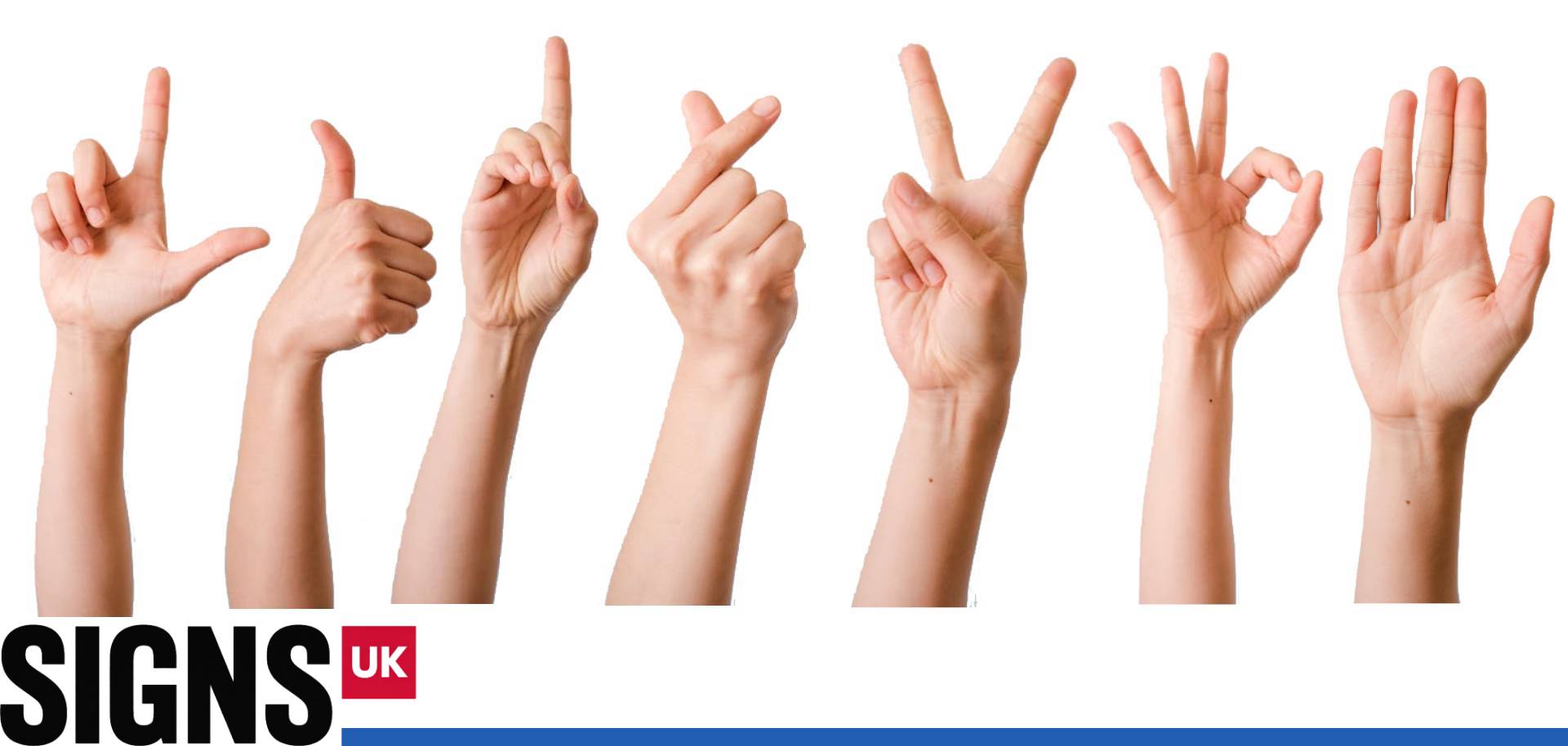
Signals are used to regulate interaction. For example, direct eye contact and raised eyebrows indicate a desire to start a conversation. They allow us to express emotions without words, to tell those around us about our feelings with the help of facial expressions.
One of the features of non-verbal signals is their situational nature – they reflect a person's current state during communication, ‘here and now’.
Gestures are body movements that express the speaker's attitude towards a person, situation or object. There are regulatory gestures, which determine the speaker's attitude towards a specific situation, and emblematic gestures, which replace words or whole phrases in communication. There are also illustrative gestures that form complete pictures (‘this is how big it is’).
It is noteworthy that the same gesture can have different interpretations in different countries and cultures.
Gestures in conversational practice
In conversational practice, regulatory, pictorial, emblematic, indicative, and affective gestures are used.
- Regulators help to control the flow of conversation, make pauses, and end statements. These include nods, expressive glances, and slight movements of the hands or body.
- Emblems have their own specific meaning. They are used where words are not required or are inappropriate. For example, shrugging your shoulders indicates ‘I don't know’ or ‘I can't do anything about it.’ A hand cupped to the ear is interpreted as a request to speak louder.
- Pictorial gestures are used to convey an idea of the shape, size, and location of an object.
- Pointing gestures indicate an object, often replacing its name, and are used instead of describing its characteristics and spatial position.
- A separate group consists of affective gestures, which directly express a person's emotional state. The main channel is facial expressions, but feelings can also be expressed through posture, hand movements and body movements.
Road signs / plates / signs
Road signs, plates and signs contain symbols or inscriptions that inform road users about road conditions, specifics and necessary compliance regimes. They include information about the route. Road signs help prevent accidents. Plates and signs are installed along motorways. Such structures are not affected by temperature changes or precipitation. Materials resistant to adverse atmospheric conditions are used in their manufacture.
|
Category |
Description |
|
Plates |
A special category of road signs installed exclusively in conjunction with standard road signs. They provide additional information to that provided on the main sign. |
|
Road signs |
are a type of navigation tool that helps drivers and pedestrians find their way around and keeps everyone safe. Their main job is to let drivers know which way to go, where to turn, where to get on and off the road, and where important places like hospitals, petrol stations, and hotels are. |
|
Signs |
on roads can be not only informational but also promotional in nature. It is important that they do not obstruct traffic, distract drivers or interfere with driving. |
Traffic signs
Road signs are classified into several types according to their function. They can serve as indicators of potential danger, the order of passing intersections, restrictions and other conditions.
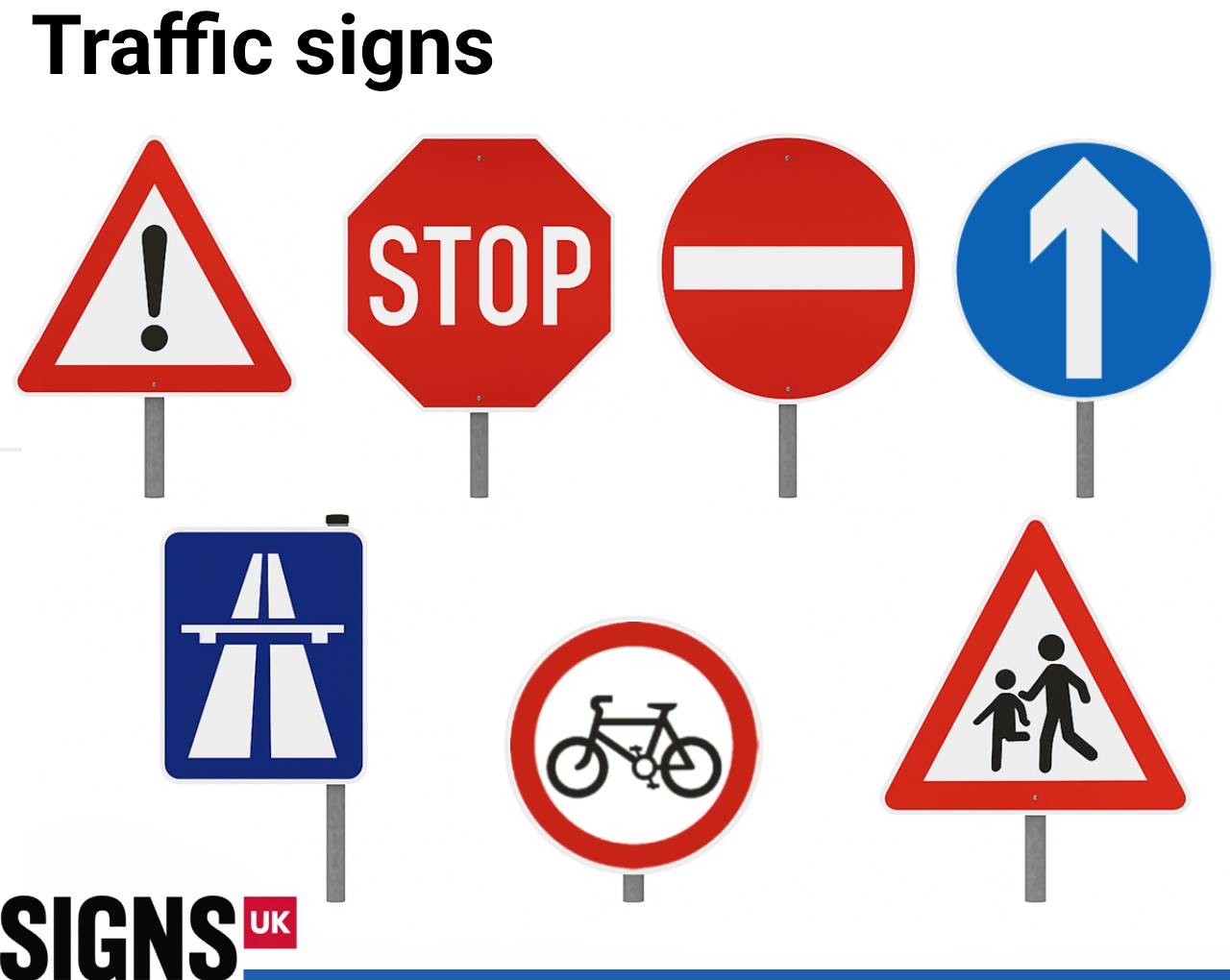
Ignoring the requirements of many signs is considered a traffic violation, for which a fine is imposed if it is recorded by a traffic camera or a police officer.
Warning signs
Warning signs are often found on roads, informing motorists of the nature of the expected danger and the need to take appropriate measures in the given situation.
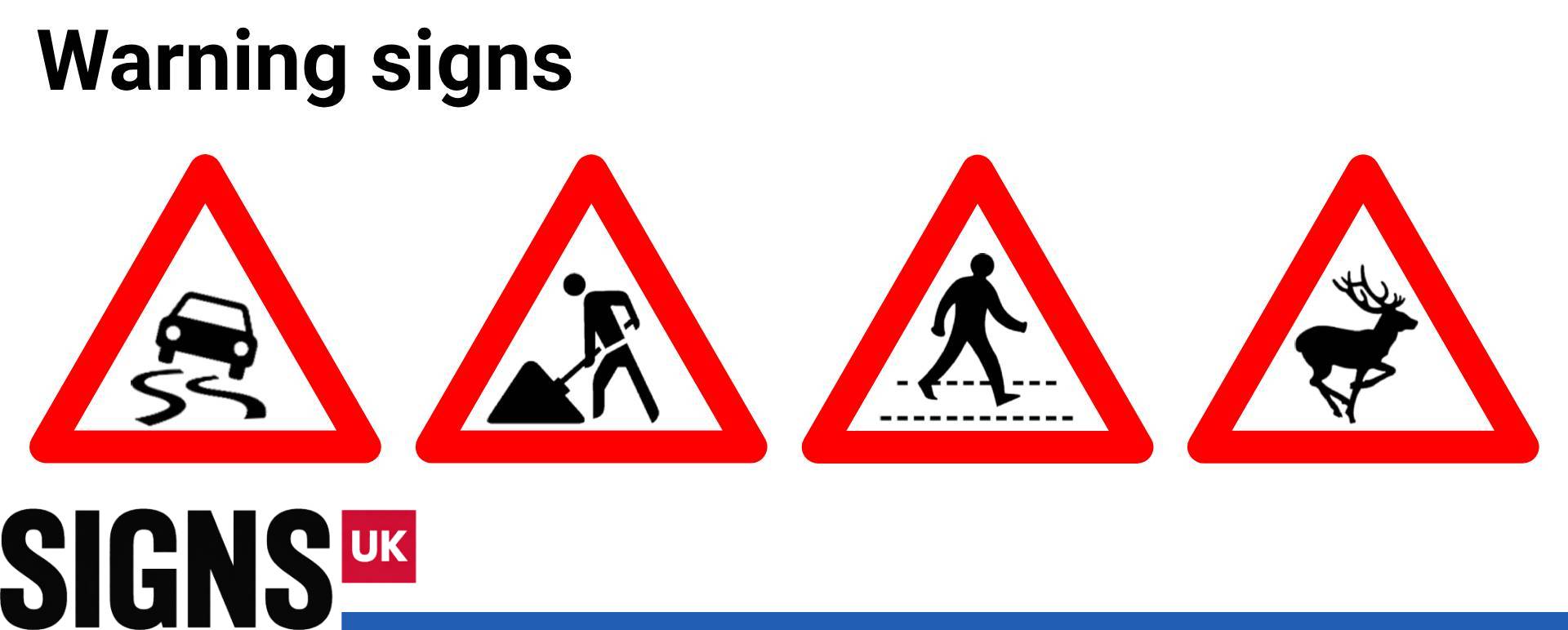
Warning signs are signs that inform drivers so that they can react quickly to changes in the road situation in order to avoid accidents and fines.
Prohibition signs
Prohibition signs, which introduce or cancel certain restrictions on traffic, are classified as a separate category. They may prohibit driving in a particular place, turning, overtaking, accelerating or stopping.
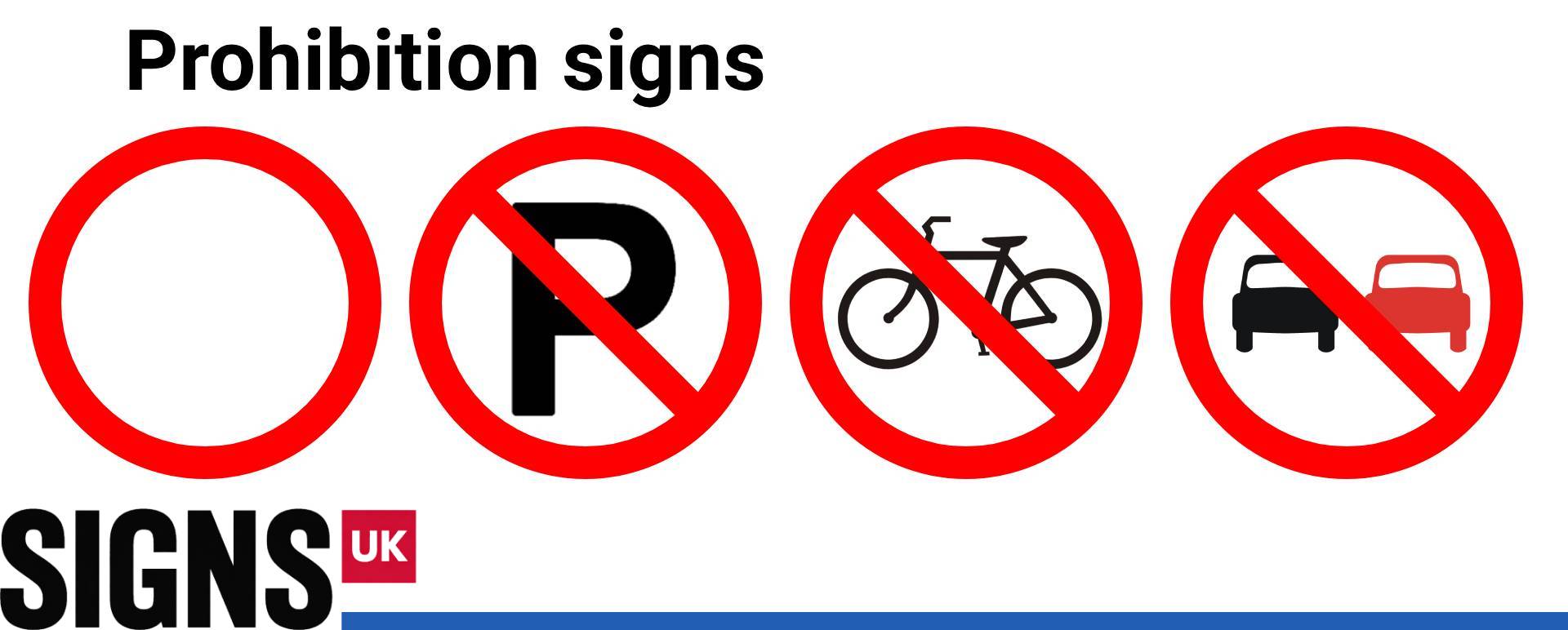
Such signs are often round in shape, with a red border or blue background. Sometimes they are crossed out with a red stripe. The most common prohibition signs are those with the inscriptions: ‘No entry’, ‘No traffic’, ‘No overtaking’.
Mandatory signs
Mandatory signs allow motorists to drive only in certain directions or at certain speeds. This is a whole group of road signs indicating the order or nature of traffic on a specific section of the motorway.
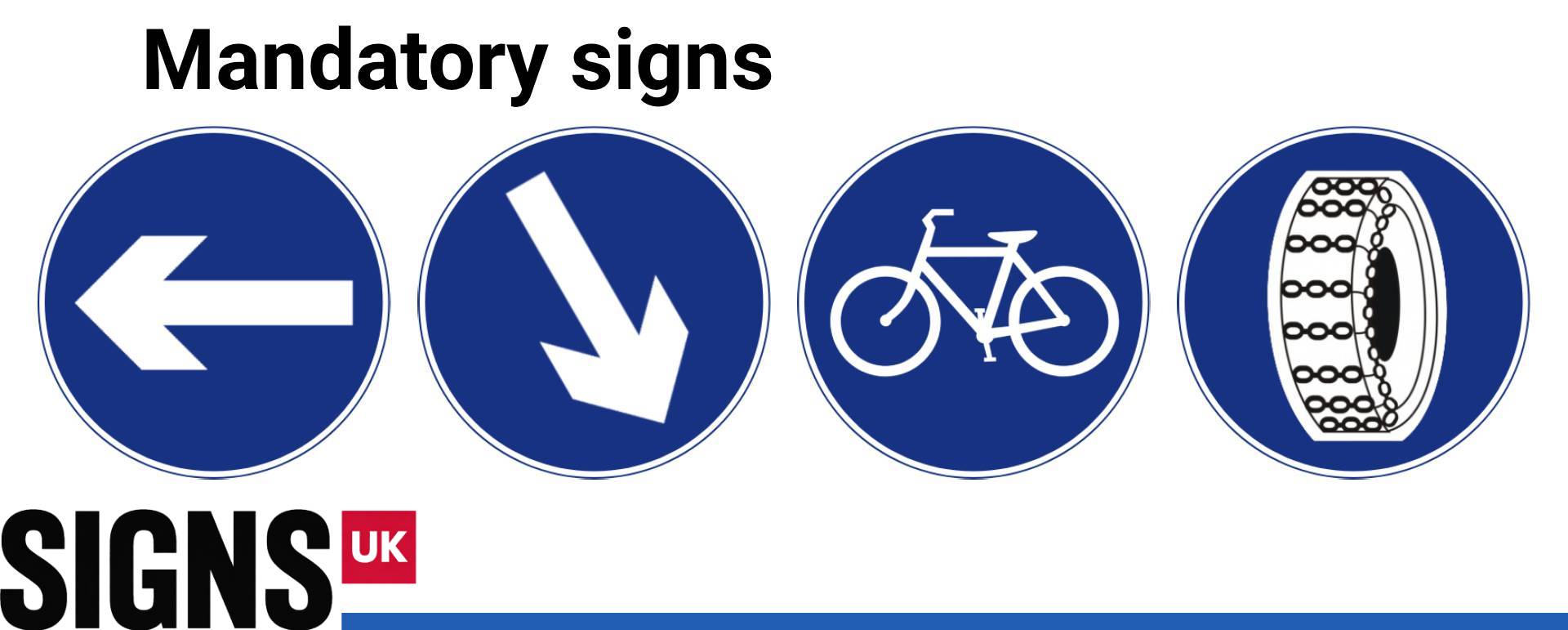
The sign ‘Straight ahead’, for example, requires traffic to move only in the indicated direction, with any deviations prohibited.
Priority signs
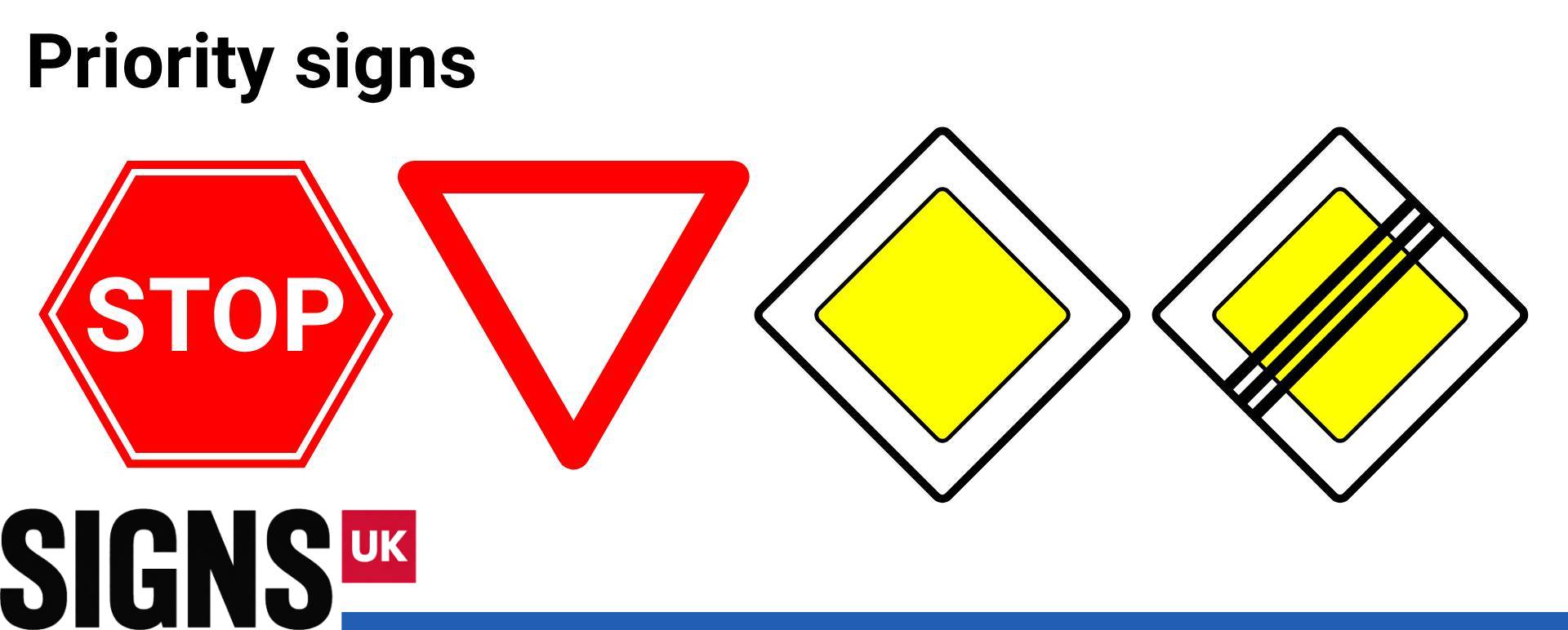
Priority signs are used to introduce or cancel special traffic conditions, for example, on streets where traffic is only possible in one direction, in residential areas in cities. Priority signs determine the order of passage at intersections and narrow road sections, showing who has to give way and who has priority.
Speed limit & zone signs
Road signs in the ‘Speed and zones’ category indicate traffic intensity and sections with restrictions in force.
Example of a sign indicating the speed limit. The sign is a white or yellow circle with a red border and black numbers in the centre. These numbers indicate the speed that must not be exceeded. The sign is placed in dangerous areas, before sharp turns and descents, and in areas with poor visibility.
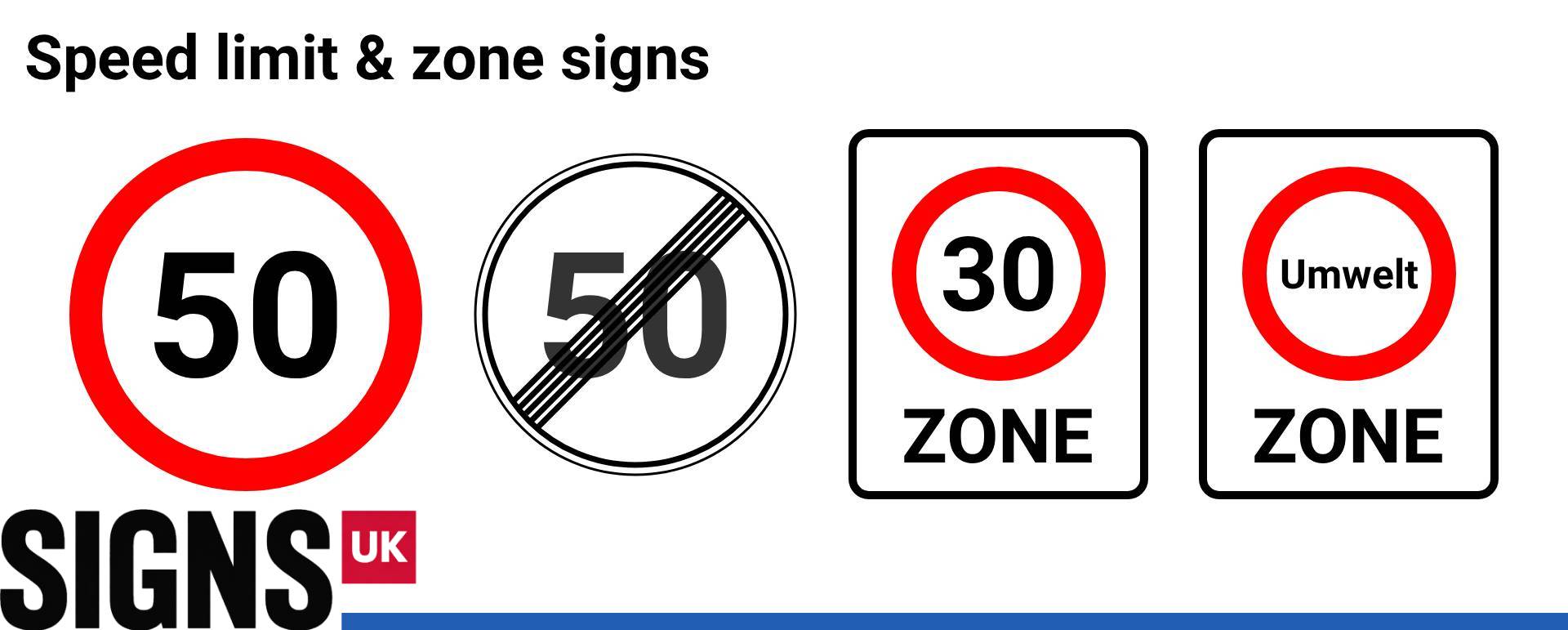
The ‘General maximum speed limits’ sign is often found on motorways. The sign informs drivers of the speed limits set by traffic regulations, exceeding which is considered a violation and is punishable by fines. For example, the speed limit is 60 km/h in urban areas, 90 km/h outside built-up areas, and 110 km/h on motorways.
Signs indicating the beginning and end of a speed limit zone are also common. They are installed at the boundaries of road sections where it is prohibited to exceed the speed indicated on the sign.
Information/service signs
Information/service signs notify drivers of specific road conditions, reminding them of the need to comply with the relevant traffic regulations and informing them of the location of specific objects on the route.
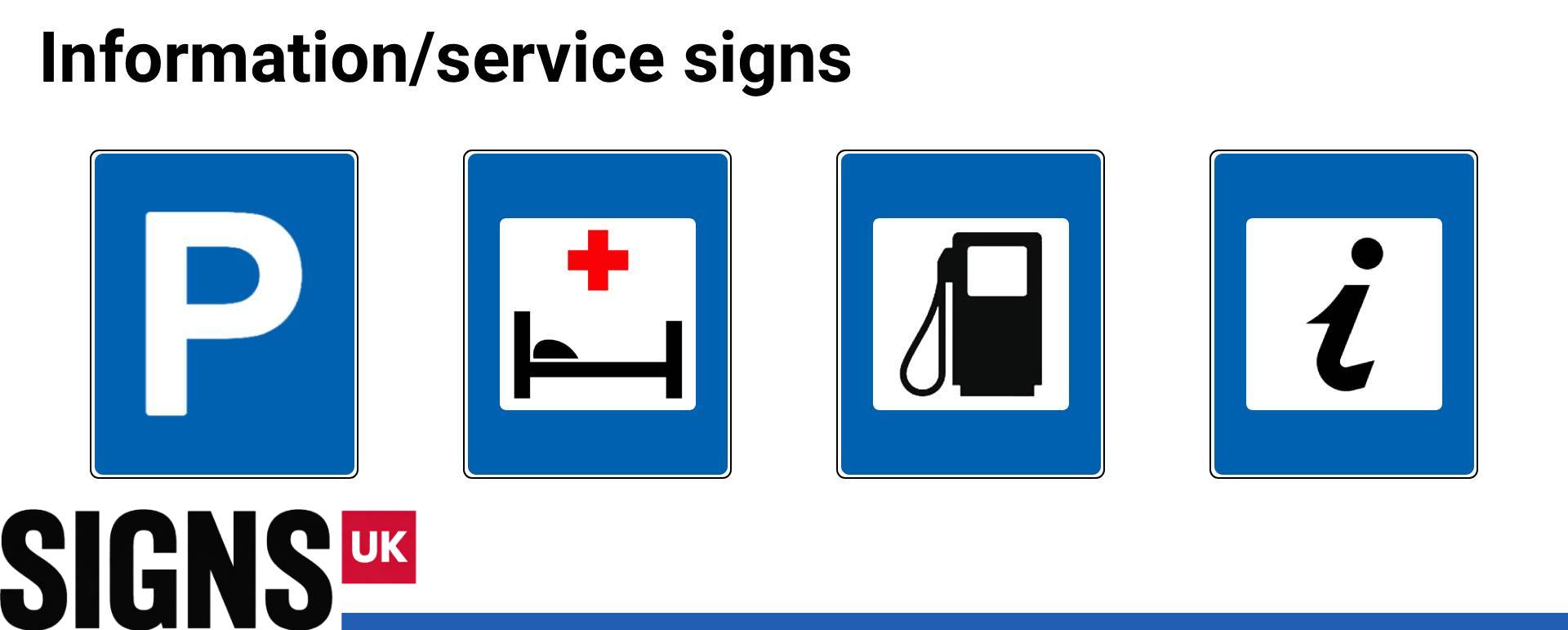
Road signs indicate the location of towns and recommended driving modes.
Service signs do not oblige motorists to take specific actions, but only inform them of the location of facilities on the route that may be useful. These include medical facilities, petrol stations and rest areas.
Direction/guide signs
Direction/guide signs inform motorists about the location of villages, towns, the direction in which to drive, the distance to facilities, and current and recommended driving modes.
Such signs are most often rectangular or square in shape and contain symbols or inscriptions that convey useful information. Signs of this type differ in colour.
Temporary signs
Temporary signs indicate temporary/road works. Such signs are installed on sections of road where repairs or construction are underway. Their purpose is to warn motorists and pedestrians of upcoming changes on the motorway and to ensure safe traffic flow.
Temporary signs can be warning, prohibitive, informational or priority signs.
They notify drivers of upcoming road works, potential hazards and changes to the motorway configuration.
Using these signs as a guide, drivers choose alternative detour routes, assess the distance to dangerous sections, and reduce speed before turns. The presence of such signs allows motorists to overcome obstacles on motorways without damage to their vehicles.
Special vehicle/lane signs
Special vehicle/lane signs designate lanes/categories of vehicles and help regulate traffic flow, including dedicated lanes for certain categories of vehicles.
In most cases, these signs are rectangular with a blue background, white symbols and text. They inform, prohibit or instruct drivers to act in a certain way.
On roads, they are used to designate lanes for public transport vehicles and cyclists. Signs in this category indicate that only certain types of transport, such as buses, are allowed to use the lane.
Shop/Street signs
Signs are various types of boards with inscriptions and images of objects. They are installed next to craft workshops. Signs can be either three-dimensional or flat.
Plates are flat boards with information, mainly about working hours, printed on them.
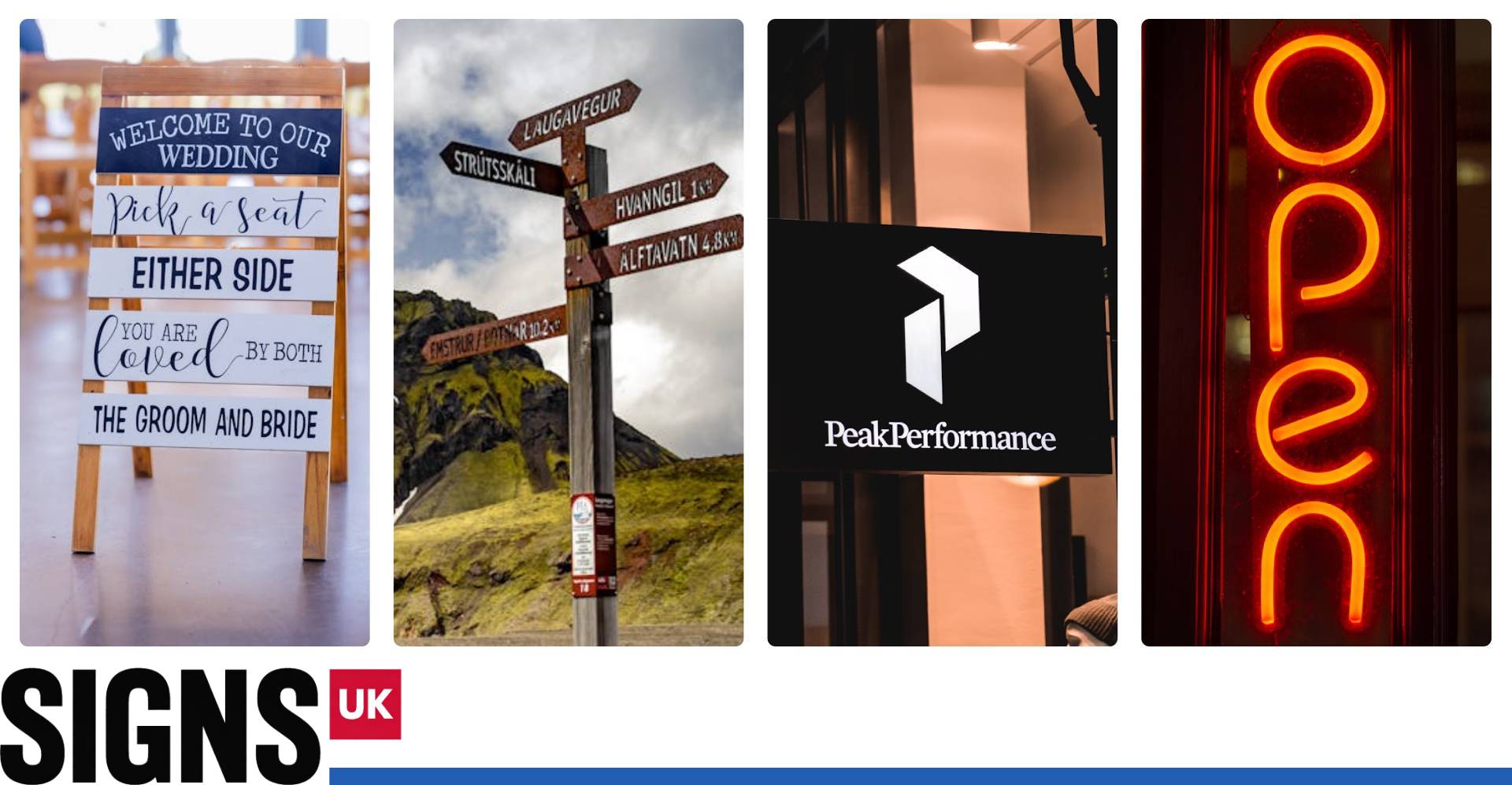
Signs have been used since ancient times: even in Ancient Rome, merchants installed stone plaques with images of the goods sold in their shops carved on them.
Shop signs and facade advertising
Shop signs are informational structures placed on the facades of buildings or next to them. They attract the attention of passers-by, indicating the presence and location of retail outlets. Signs contain shop names, logos, contact details and other information. They can be flat, three-dimensional or illuminated.
The first of these types is the simplest and most common. Text, logos or images are applied to a flat surface. Metal, plastic or wood are used to make such signs.
- Three-dimensional signs are made from various materials, including acrylic. 3D banners can be illuminated, which improves their visibility.
- A separate category includes awnings, which are fixed above the entrance to a building and have a kind of canopy roof.
- Illuminated signs are equipped with internal or external light sources – LEDs or neon tubes.
- The most modern electronic designs are LED displays that show various information.
- Facade advertising is ubiquitous – it is a broad category consisting of light boxes, panel brackets, and light panels.
Door and window signs
Door signs are among the most common signs used to convey information to visitors and employees. They can be square or rectangular in shape. There are metal and plastic door signs, both solid and with replaceable information.
They are also classified as informational, warning, special and permissive.
The first type is used to post announcements and information about discounts in shopping centres.
Warning signs contain the words ‘caution’ or ‘no entry’.
Special signs are intended for people with disabilities, such as those with poor eyesight.
Permission signs have the words ‘away from me’ or ‘towards me’ on them, indicating the direction in which the door opens.
Window signs are divided into directional, address and facade signs. Directional signs make it easier to find your way around an unfamiliar building. They usually contain short, clear text or a graphic image. Address signs show the exact address of the building on the street.
Facade signs contain information about the location of the organisation and its opening hours.
Navigation inside shopping centres, buildings and campuses (wayfinding)
Wayfinding helps to manage people flows and create a clear architectural environment. This type of navigation makes it easy and comfortable to find your way around, ensuring accessibility, safety and compliance with functional requirements.
An indoor wayfinding system is used inside shopping centres. It helps visitors quickly plan routes and find the shops and other places they need. Mobile applications are used for this purpose, allowing users to find the required locations on a map and plot the shortest route to them.
For example, interactive screens are installed in buildings to simplify and speed up route planning.
Various types of navigation solutions are used on campuses: information signs, directional signs, and digital kiosks. They provide information about the facilities available on the premises and contain directions on which way to go.
Street signs (not road signs)
Street signs are installed on buildings and public transport stops. They contain street names, building numbers, and organisation names.
Street signs can be facade, advertising, or address signs.
- Facade signs are installed on industrial, municipal, and commercial buildings. Their purpose is to convey information about the nature of the organisation's activities and its form of ownership.
- Advertising signs, in addition to official information, also contain a logo.
- Address signs show the names of neighbourhoods, streets, and building or block numbers.
Signs that combine the characteristics of informational and advertising products are classified as a separate category.
Street signs are classified by material as metal, plastic, wooden, or glass.
Advertising structures and POS
Advertising structures have a non-standard design and attract the attention of buyers, directing them to a specific department or office of the organisation. Most often, they contain brief information about products or promotions.
POS materials (from the English ‘point of sale’) refer to advertising products designed to decorate retail outlets. Their purpose is to highlight a specific product or product group among others, attract buyers' attention to it, and influence their purchasing decisions.
The most common types of POS materials are wobblers, promotional stands, banners, shelf organisers, strip tapes and stickers. They highlight specific products.
Another type of stopper is placed next to the product shelf, attracting the attention of buyers and keeping them near a specific product.
Legal/mandatory signs for businesses
Legal/mandatory signs for businesses include the name of the organisation, details of its registration in the state register, the exact address (not just the city and street, but also the postcode) and opening hours.
Legal signs for businesses can be door signs, also known as office signs, and table signs. The former contain information about the office number, department, branch name, and opening hours.
Desk signs are placed on the desks of specialists, as well as at the reception desk.
Temporary and events
Temporary signs are structures used to advertise short-term events. They are used to announce sales or special offers and upcoming events. Lightweight materials such as plastic are usually used to make these signs.
Temporary signs printed on banner fabric are popular. The main type is banners. Images and inscriptions are applied to the banner fabric using large-format printing.
You can also find signs with vinyl film appliqués. They contain only text and cannot be attached to building facades, but can be used indoors, on shop windows and windows.
Temporary signs are also often used when it is not possible to install permanent advertising, for example, when renovating a facade.
Astrological signs
Astrological signs, or more commonly known as zodiac signs, are the 12 components of the celestial belt along which the Sun travels on its visible path from Earth throughout the year (the ecliptic). Each sign is named after the corresponding astronomical constellation.
List of zodiac signs: Aries, Taurus, Gemini, Cancer, Leo, Virgo, Libra, Scorpio, Sagittarius, Capricorn, Aquarius and Pisces
Zodiac signs
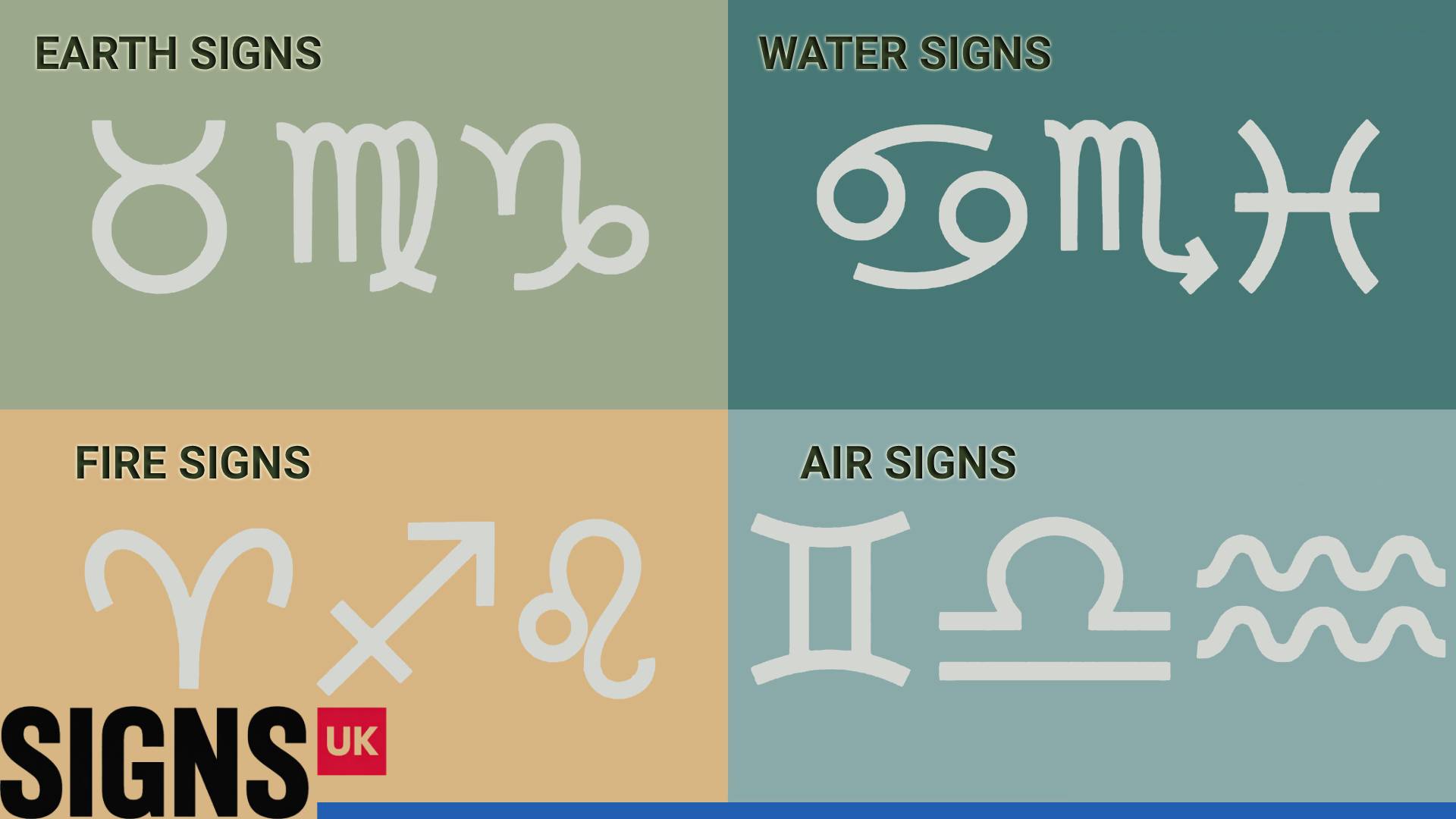
The sign is determined by the point at which the Sun was located at the moment of birth. In astrology, the signs of the zodiac constellation are classified into groups, each of which combines signs with identical characteristics.
Each sign of the zodiac corresponds to one of the four elements: fire, earth, air or water. For example:
|
Element |
Zodiac signs |
Month |
|
Fire |
Aries, Leo, Sagittarius. |
March-April, July-August, November-December |
|
Earth |
Taurus, Virgo, Capricorn |
April-May, August-September, December-January |
|
Air |
Gemini, Libra, Aquarius |
May-June, September-October, January-February, |
|
Water |
Cancer, Scorpio, Pisces |
June-July, October-November, February-March |
Earth signs
Each zodiac sign has distinct character traits. Signs belonging to the same element share common characteristics.
Taurus, Virgo and Capricorn are practical, reliable, sensual and patient.
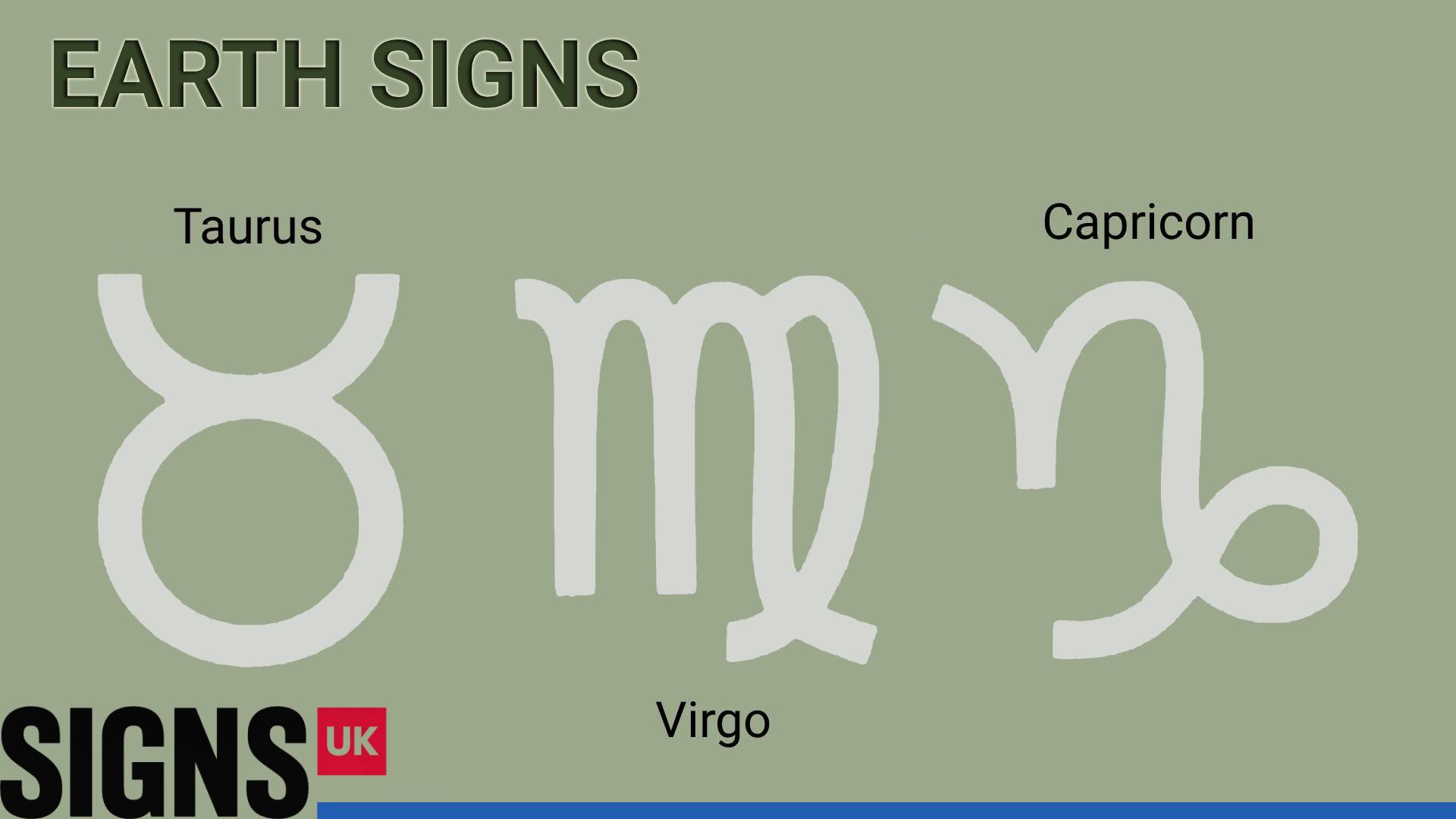
Earth signs are successful in transforming ideas into visible results, using a methodical approach rather than improvisation. Their priority is knowledge that can be applied in everyday life, skills that are useful.
Signs belonging to the Earth element are ready to support their loved ones and almost always fulfil their commitments. They work hard and do not expect instant results, understanding that it takes time to achieve goals.
They are skilled at managing material resources, including money, property, and natural resources.
- Taurus (20 April – 20 May) is a patient, reliable and thrifty sign. Most representatives of this zodiac constellation have a well-developed sense of beauty. Their weaknesses include stubbornness and a strong attachment to familiar things. Taurus people are afraid of change, which is why they often miss out on great opportunities by being overly cautious.
- Virgo (23 August – 22 September) is known for its pedantry, scrupulousness and attentiveness. This is an observant sign, often critical, placing excessive demands on both itself and those around it. Some Virgos are too picky and anxious, with a tendency to lecture those around them. At the same time, they are always ready to provide emotional support to those close to them.
- Capricorn (22 December – 19 January) is a disciplined and ambitious sign. They always have a life plan with clearly defined deadlines. Capricorns respect traditions and are often conservative.
Water signs
The water signs — Pisces, Cancer, and Scorpio — are emotional, changeable, and elusive. They have highly developed intuition and are good at sensing the needs and feelings of those around them. Water signs are caring, often altruistic, and always ready to help.
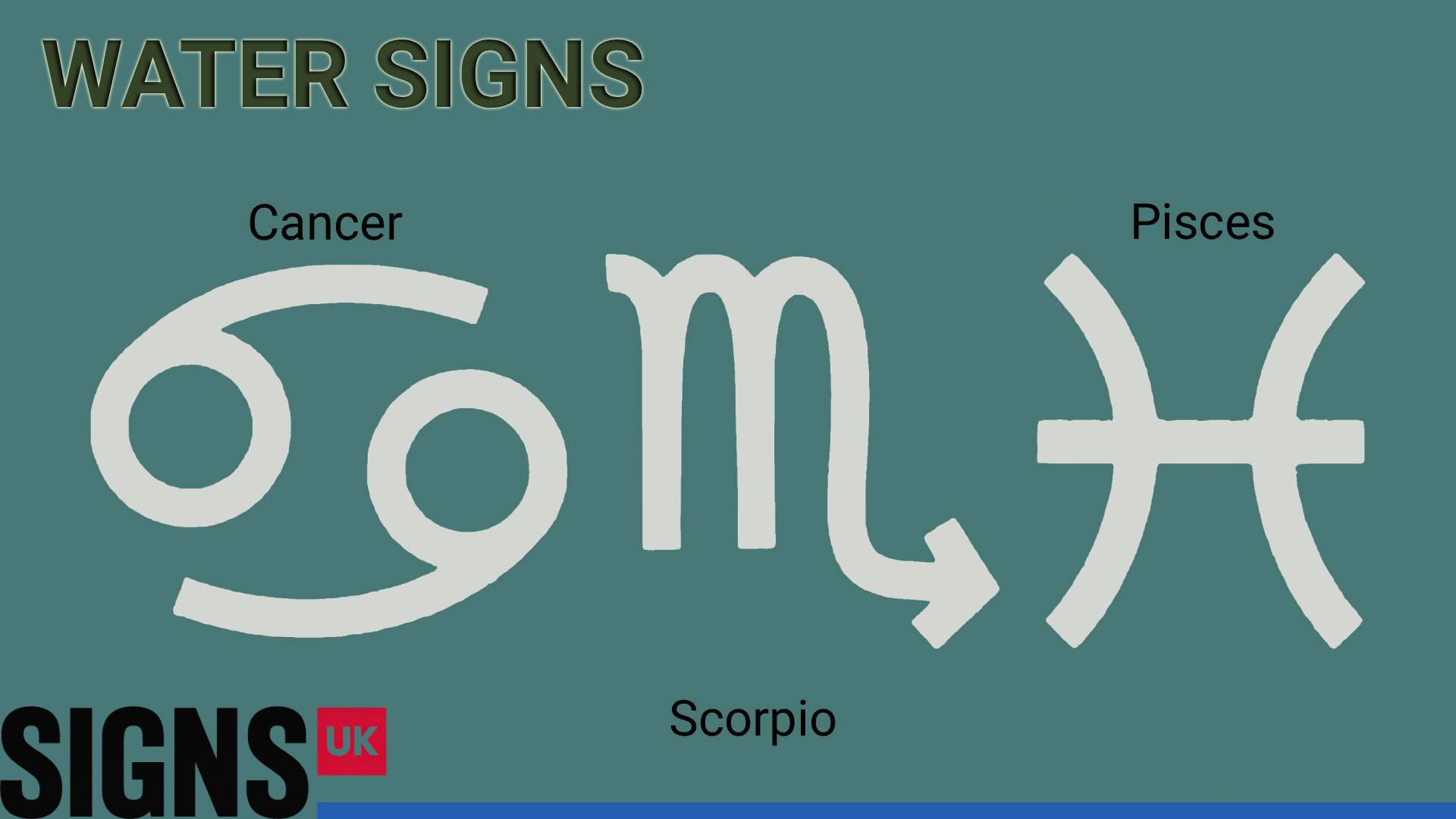
Most people born under water signs are involved in creative activities, choose careers as artists, and connect their lives with the world of art.
In addition, they demonstrate a tendency toward inversion and freely engage in dialogue with new acquaintances.
- Pisces (19 February – 20 March) are characterised by a subtle emotional organisation and a desire to balance between reality and fantasy. They are very sensitive to the mood of those around them. Pisces are very romantic by nature, are loyal partners, and become very disappointed when their expectations are not met.
- Cancer (21 June – 22 July) is known for its emotional depth combined with sensitivity. This sign easily blends into any group, but it has a tendency to experience frequent mood swings.
- Scorpio (23 October – 21 November) is a sign that transforms reality, destroying the old to make way for the new. Scorpios live in a state of emotional tension, which keeps them alert.
Fire signs
The signs of the fire element — Aries, Leo, and Sagittarius — are characterised by energy and a desire to be constantly on the move. They generate ideas and bring bold projects to life. Their characters include traits such as quick-temperedness, often combined with emotionality and a desire to dominate.
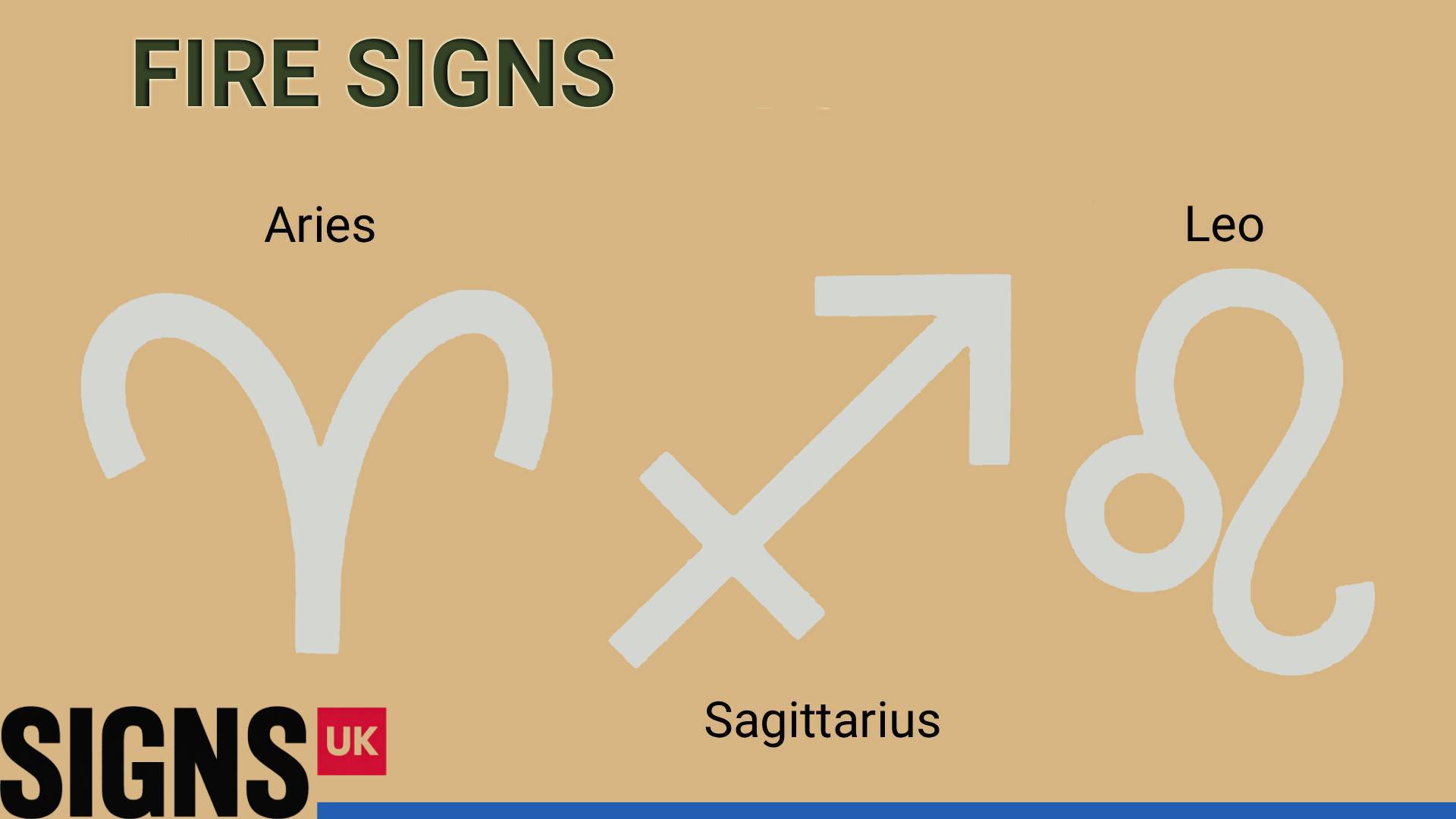
- Aries (21 March – 19 April), for example, are natural leaders who always take responsibility. They are not afraid to stand up for their beliefs, make quick decisions and move forward.
- Leo (23 July – 22 August) is famous for its fearlessness. This is a stubborn sign, always following its convictions, never knowing what doubt is. It is characterised by qualities such as pride and fantastic selfishness.
- Sagittarius (22 November – 21 December) are characterised by flexibility and thoughtfulness. They can safely be called the philosophers of the zodiac. Representatives of this sign often use their own energy to search for the truth. Sagittarians demonstrate a thirst for life, and nature has endowed them with an impulsive character. They are constantly looking for adventure and new experiences.
Natural leadership, courage, determination, and enterprise — all these characteristics apply to the Fire signs.
Air signs
Representatives of the Air element — Gemini, Libra, Aquarius — are mostly fickle, constantly craving change in all areas of life. They grasp new information on the fly, are aware of what is happening before others, and know how to build relationships with those around them. They are distinguished by their positive outlook on the world, and Air signs are famous for their flexibility and ability to adapt to different conditions. Gemini, Libra, and Aquarius are independent of the opinions of others and love freedom.
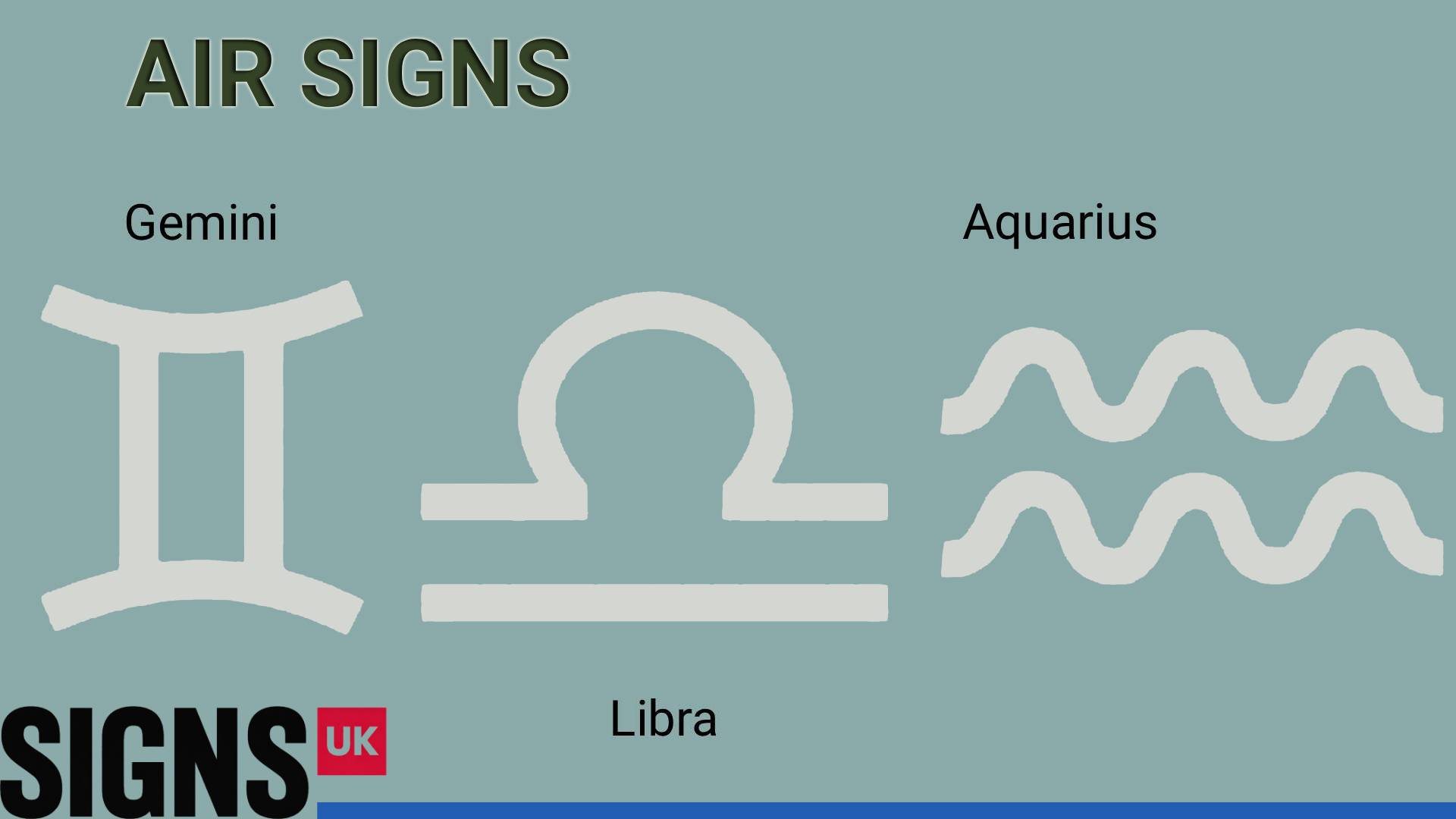
- Gemini (21 May – 20 June) is considered the most changeable of the Air signs. They are sensitive to everything that is happening, and many of them are very talkative. Gemini also have virtually no difficulty making decisions.
- Libra (23 September – 22 October). The main characteristics of this sign are radicalism, developed intelligence and a critical mind. Libra symbolises balance. Representatives of this zodiac constellation make the right decisions, but it takes them a long time to do so.
- Aquarius (20 January – 19 February). A fixed sign, famous for its stubbornness. Most Aquarians are humanitarians who bring knowledge to the world.
Chinese signs
The Chinese zodiac is a system consisting of 12 animals that represent a 12-year cycle: Rat, Ox, Tiger, Rabbit, Dragon, Snake, Horse, Goat, Monkey, Rooster, Dog, Pig.
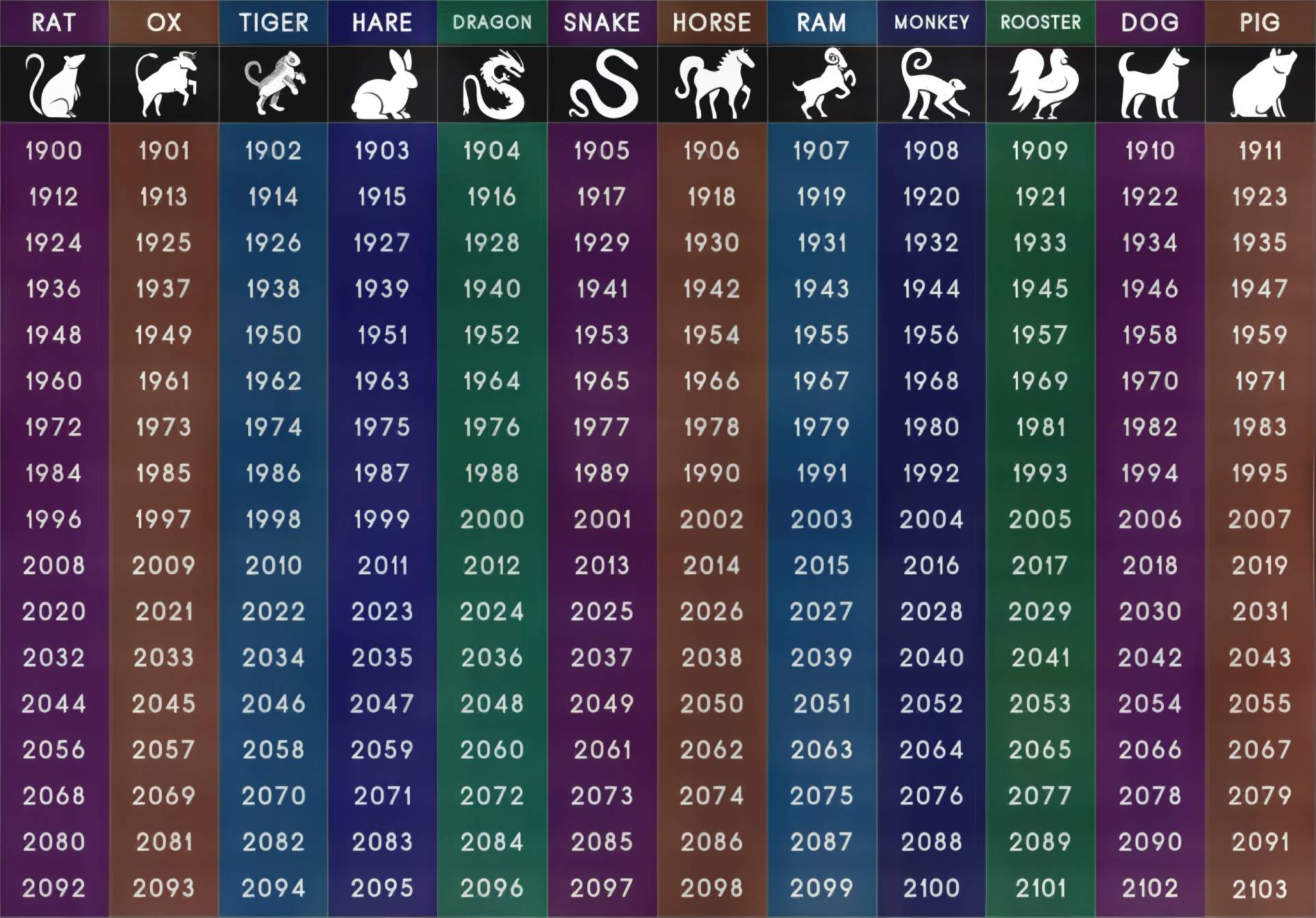
The origins of each zodiac sign date back to the Han Dynasty (206 BC – 220 AD), although some elements appeared even earlier.
The history of Chinese signs is linked to a legend that says that the Jade Emperor decided to create a way to measure time and invited all animals to participate in a race. The first twelve to cross the river were given a place in the zodiac.
Let's take a closer look at the characteristics of Chinese signs.
The Rat is associated with cunning and calculation. People born in the Year of the Rat are mostly resourceful and well-rounded.
- The Ox is associated with hard work.
- The main characteristic of the Tiger is strength.
- The Rabbit is the embodiment of gentleness.
- The Dragon is an authoritative creature.
- The Snake is renowned for its intuition combined with wisdom.
- People born in the Year of the Horse are energetic, independent and always looking for adventure.
- The Goat is a gentle, creative creature that strives for harmony.
- The Monkey embodies intelligence and agility with humour.
- The Rooster is renowned for its courage.
- The Dog symbolises loyalty.
- The Pig is the embodiment of generosity.
Each animal in the Chinese zodiac is associated with one of the five elements: Wood, Fire, Earth, Metal, and Water.
Medical ‘signs’ (clinical signs)
In medicine, clinical signs refer to objective signs of pathology or disease that a doctor diagnoses during the examination of a patient. Based on this data, a diagnosis is made and a prognosis for the disease is determined.
The symptoms of diseases can be subjective or objective. The former are identified during the collection of medical history and patient interviews, while the latter are identified during physical, laboratory, or instrumental examinations.
In Anglo-American literature, subjective and objective signs are referred to by different terms: the former are called symptoms, the latter are called signs.
Clinical signs vs symptoms
Clinical signs and symptoms are diagnostic indicators of trauma, disease or condition.
Signs are objective manifestations that can be observed and measured during examination or diagnosis. Signs include: elevated body temperature, high blood pressure, rash.
Symptoms are subjective sensations described by the patient themselves. These include pain, fatigue, nausea.
Signs and symptoms often overlap and are not always interpreted unambiguously. For example, a headache often indicates a more serious health problem, but it can also be a sign of dehydration or stress.
Signs of pregnancy
The main sign of pregnancy is the absence of menstruation, provided that the woman has no menstrual cycle disorders. Nausea and vomiting can also indicate conception. These symptoms appear 4-6 weeks after fertilisation of the egg.
During the first 3 months of pregnancy, it is common to feel tired and have sore breasts, similar to the symptoms experienced before menstruation.
Many women complain of frequent urination during pregnancy, their taste preferences change, and they experience increased sensitivity to smells.
Even before a missed period, there may be slight implantation bleeding, pulling pains in the lower abdomen, sometimes an increase in basal body temperature, and breast tenderness.
Signs of autism
Autism (autism spectrum disorder, ASD) is a serious condition that manifests itself in different ways. Symptoms largely depend on age.
The main signs of childhood autism include a desire to be alone, an inability to form warm relationships with loved ones, and speech development abnormalities.
Children with this condition tend to exhibit repetitive behaviour, and changes, whether in their daily routine or route, cause them fear and severe tantrums. They want everything to remain the same.
Motor abnormalities cause the child to spin around, clap their hands, or rock back and forth all the time.
It is noteworthy that some signs of autism are temporary or are a distinctive feature of the child's personality.
The main signs of autism in adults are difficulty recognising emotions, excessive sensitivity to smells and light, the need for repetitive actions, and unwillingness to change anything. People with autism refuse to use non-verbal cues (they do not use facial expressions or gestures) or limit their use. They may have speech intonation and rhythm disorders, take words literally, and have a narrow range of interests. Autism also manifests itself in withdrawal, a tendency to solitude, and difficulty understanding the motives of others.
In adults, the signs of the disease are usually not as pronounced as in children and are often masked by personality traits.
Signs of diabetes
The number of people with type 2 diabetes is increasing every year. This is a non-insulin-dependent form of diabetes that develops asymptomatically over a long period of time. The cause of the disease lies in the cells' insensitivity to insulin.
The most common signs of type 2 diabetes include excessive thirst (a person may drink 3 to 5 litres of fluid per day), frequent urination, especially at night, and increased appetite (the feeling of hunger does not go away even after eating).
In type 2 diabetes, wounds heal very slowly, even scratches. The reason lies in poor blood circulation and immune system disorders.
People with this disease experience dry skin and itching in the hands, feet, and genitals (due to glucose synthesis in the urine) as a result of dehydration. Since glucose irritates the mucous membrane of the urinary tract, reducing its protective properties, infections often enter the genitourinary system.
In elderly people, the symptoms may not be as pronounced and may be masked by other diseases.
Signs of cancer
The signs and symptoms of cancer can be general and depend on the location of the malignant tumour. In the early stages, cancer often has no symptoms. Clinical signs appear when there is serious organ damage.
Common signs of cancer include unexplained fatigue that does not go away and a sharp decrease in body weight for no apparent reason. People with cancer often have a fever that is not related to infectious diseases, and they sweat at night.
Other signs of malignant neoplasms include enlarged and painful lymph nodes.
Cancer is often accompanied by bleeding from the nose and gums, and unexplained bruising on the body.
Skin manifestations of cancer include the appearance of new moles, changes in the colour and shape of existing moles, and non-healing ulcers.
Signs of skin cancer
There are several types of skin cancer: basal cell carcinoma, squamous cell carcinoma, melanoma, and each has its own symptoms. Tumours develop slowly and imperceptibly in the early stages, but even at this stage there are signs that can be used to diagnose malignant neoplasms.
Basal cell carcinoma looks like a flat spot or a small red lump that may bleed from time to time and become covered with a scab. The area of skin where it is located does not heal for a long time, takes on a pearly colour, and its surface may shine. The formation of erosions or small ulcers is also possible. The spot does not disappear even after anti-inflammatory therapy. In most cases, this type of skin cancer occurs on exposed areas of the body, mainly on the face (especially often on the nose and eyelids), neck, and ears.
Squamous cell carcinoma usually appears as a dense red spot on the surface of the skin that bleeds when touched and becomes covered with a scab. It can also look like a lump with a depressed centre or an open, non-healing ulcer.
Melanoma manifests itself as a change in the size or configuration of a mole, the appearance of ragged edges, uneven colouring, itching, burning and pain when touched. Bleeding or ulceration of the surface is also possible.
Signs of bowel cancer
Bowel cancer is a cancerous condition in which a malignant tumour appears in the small or large intestine. It most often affects the large intestine (colorectal cancer). In the early stages, the disease shows almost no symptoms. Symptoms appear as the tumour grows and include:
- weakness and excessive fatigue that do not go away after rest;
- aching or sharp pain in the abdomen and upper abdomen;
- bloating, excessive gas;
- a prolonged increase in body temperature to 37.1-37.5 degrees;
- false urges to empty the bowels, constipation alternating with diarrhoea;
- poor appetite and weight loss without any obvious cause.
Please note! In the third and fourth stages of cancer, blood and mucus may be present in the stool.
Signs of breast cancer
The main symptom indicating breast cancer is a lump in the breast or armpit area. However, in the early stages, the disease may not have any symptoms at all. As it develops, this type of cancer can be recognised by the following signs:
- A change in breast size — the appearance of asymmetry, when one breast becomes noticeably larger or, conversely, smaller than the other. There may be lumpiness, nipple retraction, or distortion of the contours.
- Pain, tingling, and swelling — breast cancer can cause a feeling of fullness and tingling. Severe pain is rare in the early stages.
- Increased skin temperature in the area.
- Changes in the skin — the epidermis above the tumour may resemble ‘lemon peel’, with local redness, sores or areas of skin retraction.
- Changes in the shape and colour of the nipple and areola.
- Abnormal discharge from the nipples, most often bloody and serous-bloody. They can occur even without pressure from both or only one breast.
Signs of dementia
Dementia, also known as senility, manifests itself as a complex of cognitive impairments: behavioural and emotional changes. The specific symptoms and their severity may vary with different types of dementia, depending on the stage of the disease.
Cognitive signs of dementia include:
- Memory problems. Short-term memory deteriorates most severely (the person forgets recent events and conversations).
- Thinking and speech disorders. There are difficulties with word selection, interpretation of phrases, and the ability to think logically.
- Disorientation. The person gets lost in familiar places and confuses times of day and dates.
- Deterioration of visual-spatial functions. Problems with accurately judging distance and recognising people or objects.
Behavioural signs of this disease include changes in personality and behaviour. A person who was previously polite becomes rude and irritable. Dementia often reduces a person's ability to take care of themselves and interpret auditory and visual signals. For example, a person may begin to consider medication to be poison. As the disease progresses, it becomes increasingly difficult for them to control their own behaviour, and they become apathetic, anxious, and emotionally unstable.
Signs of high blood pressure
High blood pressure is commonly referred to in the medical community as arterial hypertension or hypertension. The disease manifests itself as a regular or periodic increase in blood pressure above normal values. This can occur as an independent disease — hypertensive disease — or as a symptom of other pathologies.
It is noteworthy that over time, the receptors responsible for the sensation of high blood pressure become less sensitive. Many people are unaware that they have hypertension, but more often than not, this condition can be recognised by the following symptoms:
- headache, feeling of heaviness in the head;
- dizziness;
- nausea;
- ‘flies’ or flashing lights before the eyes;
- decreased visual acuity.
Note! Secondary hypertension is caused by other chronic pathologies, in which case it is accompanied by signs of these diseases.
Signs of sepsis
Sepsis is a dangerous infectious complication of several diseases at once. The body begins to react in a generalised manner to the penetration and movement of the pathogen. The condition of patients with sepsis is assessed as severe, with signs of obvious intoxication, inflammation and failure of various organs.
There are no specific symptoms as such. A number of general signs can be identified, including fever – an increase in body temperature above 39 degrees. Under the influence of sepsis:
- consciousness is impaired, there is a risk of falling into a coma;
- blood pressure decreases;
- general weakness increases;
- drowsiness and sleep disturbances;
- profuse sweating;
- pale skin with a greyish tinge and cyanosis of the nasolabial triangle.
In addition, there may be a haemorrhagic rash on the surface of the body, breathing becomes rapid and difficult, and urination becomes infrequent. Infectious foci form on the skin, and the functioning of internal organs, primarily those responsible for digestion, respiration, and urination, is disrupted. Along with the general picture, symptoms of the primary focus of infection may be observed in the form of wound suppuration or boils.
Signs of stroke
Signs of stroke manifest themselves in facial distortion, particularly a crooked mouth. When there is bleeding in the brain, there is a feeling of weakness in the legs and arms, mainly on one side of the body. The person begins to experience difficulty speaking, their words become slurred, and they have trouble understanding what others are saying.
In addition, there may be vision problems affecting one or both eyes.
A stroke is almost always accompanied by dizziness, impaired coordination, and a sudden severe headache that is not caused by the usual triggers.
The impact on the brain can result in sudden disorientation and memory problems.
If any of these symptoms appear, immediate medical attention is required.
Vital signs
Vital signs are several medical indicators that indicate the state of the body's basic functions.
The four main vital signs are body temperature, blood pressure, heart rate, and respiratory rate.
The purpose of measuring vital signs is to assess a person's overall physical condition, identify possible pathologies, and track progress towards recovery.
Normal vital sign values depend on age, gender, body weight, and overall health.
Significant deviations from the norm require urgent medical attention.
Signs in sign language
Signs are actively used in sign language. They are used to express gratitude, apologise, greet people, and are applicable in a wide variety of situations.
Speech gestures are reproduced by hand movements, replacing individual words and sometimes entire expressions.
Gestures are inherently figurative: hand movements help to convey the characteristics of an object or certain actions. For example, love is expressed by placing a hand on the heart.
Illustrative gestures help to focus attention on certain things and objects, indicate direction, and depict outlines.
Adaptors include facial expressions and hand and foot movements that reflect emotional states ranging from boredom to tension.
Regulators are non-verbal actions that control conversation between people (eye contact with interlocutors, nodding).
Idioms
An idiom is a fixed expression that cannot be broken down into its constituent parts, and whose meaning cannot be deduced from the meanings of its individual components. Such expressions are understood as a whole and cannot be translated literally.
A sign of the times — something that shows what is typical or characteristic of a particular period in history.
Take it as a sign — to interpret something as a signal or message that guides a decision.
Signs of life — evidence that someone or something is still active or alive.
A good sign — an indication that something positive is likely to happen.
A bad sign — an indication that something negative may happen.
Sign of the cross — a Christian gesture made as a symbol of faith or blessing.
Sign on the dotted line — to formally agree to something by signing a contract.
Read the signs — to correctly interpret signals or clues about a situation.
Miss the signs — to fail to notice obvious clues or warnings.
Show signs of something — to begin to display evidence of a condition or change.
Sign the papers — to complete official documents, often related to legal or financial matters.
Sign off on something — to give formal approval or authorization.
Warning signs — signals that indicate potential danger or problems ahead.
No sign of someone/something — no evidence that a person or thing is present or happening.
Sign of approval — an action or gesture showing acceptance or agreement.
Abstract signs
Abstract signs refer not to external events or specific symbols, but to internal or semantic messages or signals. They cannot be clearly defined or proven. They manifest themselves at the level of sensations, thoughts, states and coincidences of meaning. Such signs are most often recognised on an intuitive level and do not require personal interpretation, since their meaning is revealed not immediately, but in the context of a person's life experience, beliefs and internal state.

Signs of success
Successful people possess a number of personal qualities that set them apart from others. All of them are important components of successful activity. These are:
- Determination — the ability to set clear goals and persistently move towards achieving them, regardless of obstacles.
- Persistence — the ability not to give up in the face of difficulties, to continue working on tasks even when everything stands in the way.
- Self-confidence — the ability to cope with doubts and fears, establish and maintain positive relationships with others.
- Flexibility and adaptability — the ability to respond correctly to change and quickly adapt to new circumstances and conditions.
- A desire for self-development — successful people spend a lot of time and money on improving their skills and knowledge.
Discipline and the ability to set priorities correctly — to solve the most important issues first — are also important for successful activity. In addition, communication skills, the ability to process information quickly, productive interaction with different people, and continuous development are required.
Signs of respect
Signs of respect can be expressed in various forms: through speech, gestures, or traditions in different cultures. Most often, this takes the form of observing verbal etiquette: using established expressions that are customary at a certain stage of communication. For example, greetings such as ‘Hello!’ and ‘Good afternoon!’ At the end of a meeting, say goodbye with ‘Goodbye!’ or ‘See you soon!’ Part of speech etiquette includes apologies in the form of the words ‘Excuse me,’ ‘I apologise,’ as well as requests: ‘Please,’ ‘Excuse me, please.’
It is customary to address a conversation partner of equal status simply by their first name, and to add the patronymic to those of higher status. In case of disagreement with the interlocutor's opinion, it is important to maintain a calm tone of voice.
Gestures of respect are expressed by a handshake and a nod of the head, indicating attention to the speaker's words.
The traditions of England and the Netherlands have their own signs of respect, which are manifested in various aspects: greetings, communication with people, and demonstrations of gratitude. For example, the British address people they do not know well by their surname, adding ‘Mr’ or ‘Mrs’. The Dutch, among close friends and family, may greet each other with three air kisses on the cheek — first on the left, then on the right, and then again on the left.
Signs of weakness
Signs of weakness include lethargy, drowsiness, and a constant lack of energy. In addition, there may be difficulty concentrating, headaches, and muscle stiffness. In addition to physical symptoms, there are also psychological symptoms. Weakness can be physiological, which is a normal reaction of the body, or pathological, caused by internal disorders. The former passes after rest, while the latter persists for a long time.
Emotional weakness manifests itself in frequent resentment, fear of conflict, pronounced dependence on the opinions of others, and feelings of helplessness. Psychological signs include self-doubt, low self-esteem, unwillingness to take responsibility, and a tendency to be self-critical.
Behavioural weakness manifests itself in an inability to say ‘no,’ submission to pressure from others, procrastination, and avoidance of difficulties. People who give up on their goals at the first sign of difficulty, who are passive, who justify their own inaction, and who have a victim mentality can also be considered weak.
Signs of maturity
Maturity is commonly defined as a complex psychological state characterised by the ability to consciously manage one's life, take responsibility for one's decisions and choices, and build harmonious relationships with the surrounding world. This does not refer to the age stated in one's passport, but rather an inner readiness to determine one's own destiny.
Signs of maturity manifest themselves in various areas, from thinking to behaviour, emotional attitude and relationships with others. These include flexible thinking, awareness (awareness of one's own emotions, motives and desires), the ability to admit mistakes and let go of the unnecessary.
A mature person consciously takes responsibility for their own life and decisions, as well as for their consequences. They do not blame circumstances for their failures and are not afraid to adjust their plans when conditions change. Mature people are also able to take criticism in stride, consider their opponent's words, and try to understand whether they are worth following. They are characterised by emotional stability and adequate self-esteem. They do not need constant approval from those around them.
Signs of leadership
Leaders are those who can unite people around a common goal, inspiring them to achieve results that exceed the capabilities of individuals. True leadership lies in the ability to influence others, to inspire them to follow you willingly, rather than out of fear or obligation.
The qualities necessary for a leader include strategic vision, communication skills, emotional intelligence, decisiveness and responsibility. It is important to be able to set long-term goals and formulate a clear direction for the team. A true leader knows how to recognise, understand, and manage both their own emotions and those of the people around them. They are ready to make difficult decisions even with limited information, take responsibility for the consequences, quickly adapt to change, view mistakes as experience, and strive for continuous development.
A person with leadership qualities is honest and determined, courageous and emotionally stable. Such people do not shy away from difficulties, they take risks, which they always calculate in advance, if this is necessary to achieve their goals.
Signs of love
People consider the following to be signs of love:
- A deep emotional connection. Lovers tell each other about their innermost feelings, anxieties and joys, receiving mutual participation and a warm response.
- Acceptance of your partner as they are. An individual's characteristics are not perceived as an obstacle, but rather emphasise their individuality.
- Respect with trust. Partners allow each other to be themselves without fear of control or judgement.
- The desire to make your partner happy by showing care, support, giving unexpected surprises and small joys that bring warmth to the soul.
Behavioural signs of love include the desire to constantly be in contact with someone who is attractive. The loved one is perceived as valuable, and there is a desire to understand and explore them, to make them part of one's own life.
Openness and sincerity reign in romantic relationships. Partners are willing to share their thoughts, feelings, and experiences without fear of judgement or misunderstanding. They want to overcome all difficulties together and show tenderness and affection towards each other.
Divine signs
Divine signs are events, phenomena or symbols that people interpret as messages, warnings or instructions from God (or a higher power). They are perceived not simply as coincidences, but as meaningful signs with spiritual significance
|
Category |
Description |
Forms of manifestation |
Example of interpretation |
|
Natural phenomena |
That which goes beyond normal perception and is interpreted as a sign from above |
Sudden light, rainbow, unusual sky; thunder or lightning at a significant moment; earthquakes, eclipses |
A rainbow after prayer is perceived as a sign of comfort |
|
Life events |
Chains of circumstances that seem ‘too precise’ to be coincidental |
A chance encounter; unexpected rescue; a sudden change in circumstances |
A person was in doubt and received an answer through a specific event |
|
Dreams and visions |
One of the most ancient types of omens |
Prophetic dreams; symbolic images; recurring motifs |
A dream is perceived as a warning or guidance for action |
|
Miracles |
Violation of the usual laws of nature |
Healings; ‘inexplicable’ rescues; apparitions of saints |
Healing after reading a prayer is considered a manifestation of divine power |
|
Symbolic signs |
Images and symbols filled with spiritual meaning |
The cross; light; numbers (3, 7, 12); fire, water, dove |
A recurring number is perceived as an indication or reminde |
Note! In religion and spiritual traditions, the numbers 3, 7 and 12 are considered sacred and symbolic. Their meanings partially overlap in various religious beliefs.
The number 3 is a symbol of divine completeness, unity and harmony. In Christianity, it is associated with the Holy Trinity — the Father, the Son, and the Holy Spirit. In world traditions, it represents the beginning, middle, and end; the body, soul, and spirit. This number is often interpreted as a symbol of God.
The number 7 represents holiness, completeness, and divine order. The Bible says that God created the world in 7 days. Here we can also recall the 7 deadly sins and the 7 virtues. It is one of the most sacred numbers in religions.
The number 12 symbolises divine order and earthly peace. In Christianity, it immediately brings to mind the 12 apostles.
Conclusion
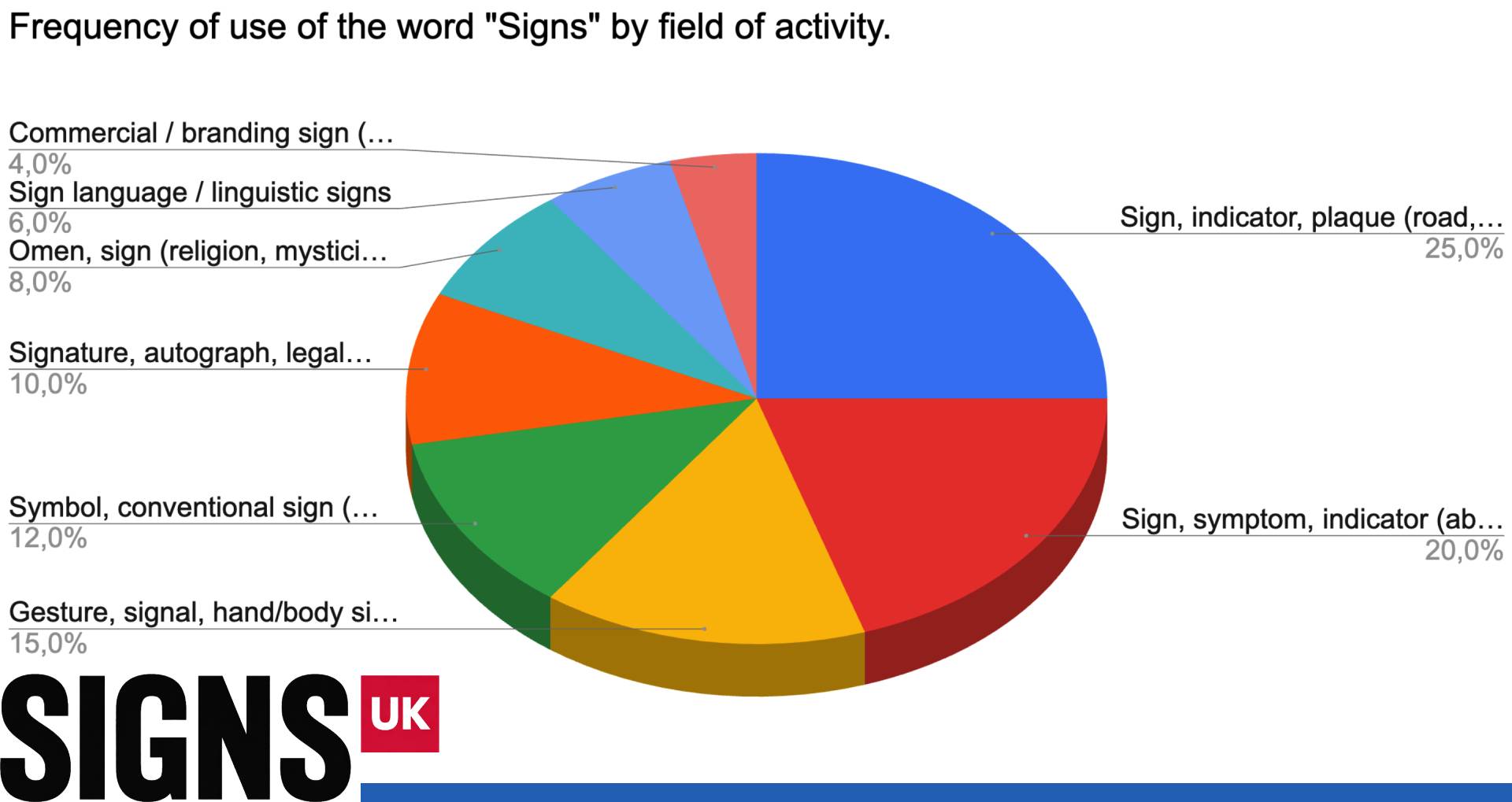
In this article, we have examined the possible meanings of the word signs in English. Most often, the word is used to refer to road signs, medical signs, and gestures. We have also provided examples of images for a more visual and convenient understanding of the material.